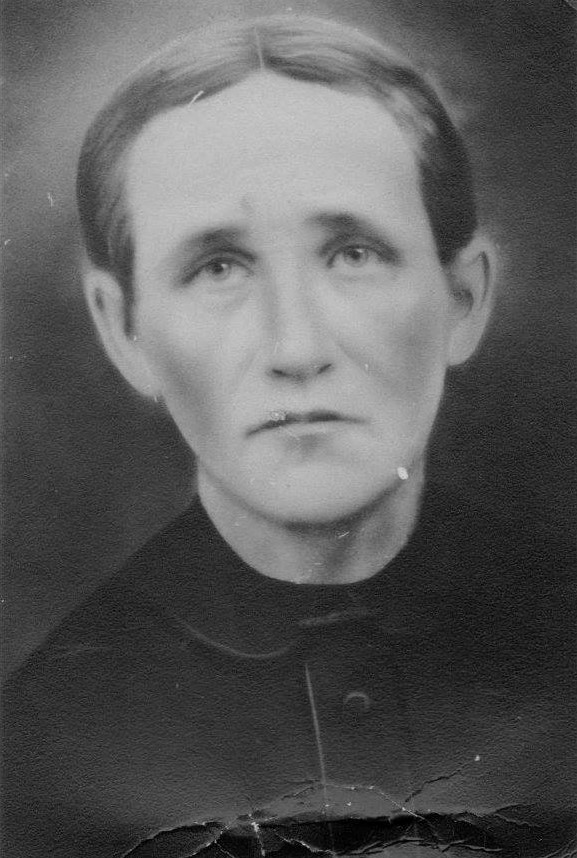
Louisa Myrtlelee Elbrook was born on February 18, 1850, in Charleston, South Carolina, to William Elbrook, who was born in Germany, and Matilda Lindsey, who was born in Florida. She experienced the turmoil of the Civil War during her childhood, which left a lasting impression on her. In adulthood, she married Hezekiah Crenshaw, and they had 13 children, of whom 10 reached adulthood. Louisa was appointed as the Postmaster of the Cannon Postal District in Walhalla, South Carolina, in 1879, which reflects her active role in the community.
1850 United States Census
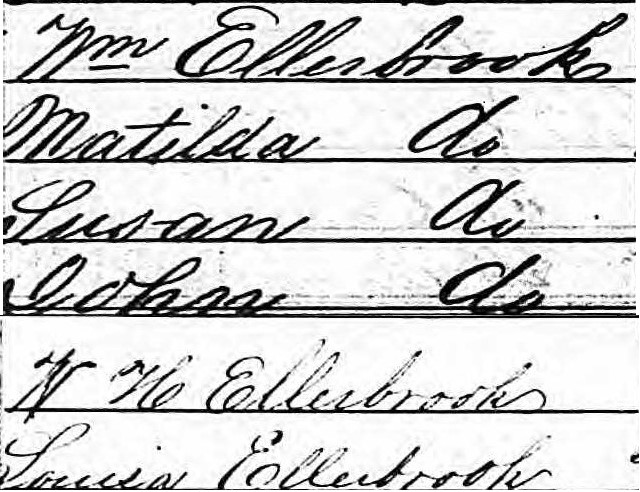
On August 3, 1850, Louisa was five months old. She lived in Christ Church Parish (now Mount Pleasant), Charleston, South Carolina, with her parents, William (spelled Wm), 37, and Matilda Lindsay Elbrook (spelled Ellerbrook), 27. Her siblings were Susan, 10, John, 5, and W. H. (William H.), 3. William, originally from Prussia, worked as a carter, transporting goods by wagon, while the rest of the family members were born in South Carolina. Name listed: Louisa Ellerbrook1
Mount Pleasant (formerly Christ Church Parish), Charleston, South Carolina
A Childhood Interrupted by the Civil War
An article written by Louisa was published in the Keowee News in Walhalla, South Carolina sometime between 1930 and 1932, soon after she turned 80. Entitled “A Reminiscence”, it describes a vivid memory from the beginning of the Civil War, about 1861. This was one of a series of Louisa’s articles, but this is the only one that has been preserved:
My mind is running back today to the days of my childhood and the days of the Civil War. War was declared and Federal soldiers were moving out Confederate soldiers coming in. My childhood home was on Sullivan’s Island near Charleston. My father was a truck farmer, and he furnished nearly all the other residents with many kinds of vegetables, also fish in summer and oysters in winter. In this way he had a considerable little bank account; but the talk about a war forcing many good citizens to have to either leave the island or stay and take the consequences did not affect him. My father decided to stay. A fleet of several large ships called the “Man-of-War-Ships” rocked on the bar on the waters of the ocean, and no one knew how soon the island would be bombarded. Fort Moultrie was at first the garrison of the Federal (or Union States) troops, but the declarations of war between the Southern States and the Northern States – the Federals – under Major Anderson’s command, slipped over to Fort Sumter – a fort built out in the ocean – and the Confederate soldiers took possession of Ft. Moultrie. It was supposed Major Anderson’s intention was to be taken off by some of the fleet, and the ship “The Star of the West” undertook to reach Ft. Sumter and rescue them, but failed in the attempt. I can truly say that myself and all the islanders were the ones who heard the first shot fired in the war. At that time I was eleven (11) years old. It was not long till the “white” flag was run up and the Federals surrendered. No one was killed; the fort was slightly damaged but the commander and his men were not made prisoners, but were allowed to be taken off and added to the Northern army. Soon after Major Anderson and his men vacated Ft. Sumter it was garrisoned by Confederate soldiers. At this time it seemed that the fleet on the bar was there to keep any ships or boats from coming into port, and I heard them chase a skooner laden with dry goods until it foundered near the head of Sullivan’s island, and the people of the island helped themselves to the merchandise till the ship broke to pieces.
My father’s family resided near the back beach toward the mainland, and we did not have any fear of trouble for quite a while, but trouble was in the air, and the inhabitants began to grow uneasy about their surroundings, and some things began to happen to cause uneasiness. We were under martial law, or rather military law, and there was one thing that happened that I will never forget. Two men, Confederate soldiers, came one day and searched the whole place when my father and mother were gone to the city. There was no one at home but my two little brothers and myself. The soldiers used all kinds of threats, but did not find what they were searching for.
Oh! How that scene haunted me for months, and when I tried to go to sleep at night he was, it seemed, right before me.
Louisa Myrtlelee Elbrook, 1930-1932
Another thing happened that was, it seems to me, cruel and uncalled for. I don’t suppose that there are many living today that (with myself) witnessed the deed. There was a handsome young man from New Hampshire happened to be in the Southern States when the war broke out, and being cut off from his own state, he joined the Southern army and was with his command at Ft. Sumter; and one day while looking out over the ocean at the vessels, he exclaimed: “Those ships look so close it seems like anyone could float a raft out to them!” Because he was a Northerner this was reported to the commander, and was court martialed and condemned to die, being convicted of treason. The time and place was to be on Sullivan’s Island. Everyone knew him there. He was so good and friendly, he was fair and had pretty blue eyes and blond curly hair. It looked just like wilful [sic] murder to cause him to die in that way. The day was set for him to be shot. I was only a child, and like a child, asked my mother to let my little brothers and me go to see him. With a long ring of others, six men with guns stood facing him, and pretty close to where we stood. I thought I wanted to see the sight at first, but when he stood there with a white cap on, and when they took it off and put on a black cap, I knew then I had rather have stayed at home. He looked so fair and innocent. Oh! How that scene haunted me for months, and when I tried to go to sleep at night he was, it seemed, right before me. Those six men all had guns but there was only one loaded to kill, so neither one knew who had fired the fatal shot. He fell. His coffin was near and a two-wheeled cart called a dump cart, and a mule, were ready to take him to his grave. He was nailed in his coffin, and in just a little while he was in a cart and started to the graveyard. As it was the way we went home, my little brothers and myself and one man to help the man that drove the cart, were the only ones at that burial, and many times I have thought perhaps an anxious father, a hopeful mother, brother or sister have listened for that step, and maybe the latch string might be hanging outside the door expecting him to come home. Little could they ever know of his fate, as at that time all communication was cut off between the North and the South.
The time came at last when my parents thought for safety they had better sell out and leave the island, and choose another home in the mountains of Oconee County. We moved here where they all lived and died. I am the only one of my father’s family living. I am 82 years and 6 months old.
It is noted at the bottom of the article that Louisa was born on February 18, about 1850.2
Sullivan’s Island, South Carolina
1879-83 Appointment as Postmaster

According to a roster of Postmasters appointed by the United States Government, Mrs. Louisa M. Crenshaw assumed the role of Postmaster for the Cannon Postal District in Walhalla, South Carolina, on December 31, 1879.3
In three official registers of the United States Government. Louisa M Crenshaw was listed as the Postmaster of Cannon Post Office in Oconee County, South Carolina, for which she was compensated $1.10 in 1881, $1.58 in 1883, and $2.63 in 1885.4
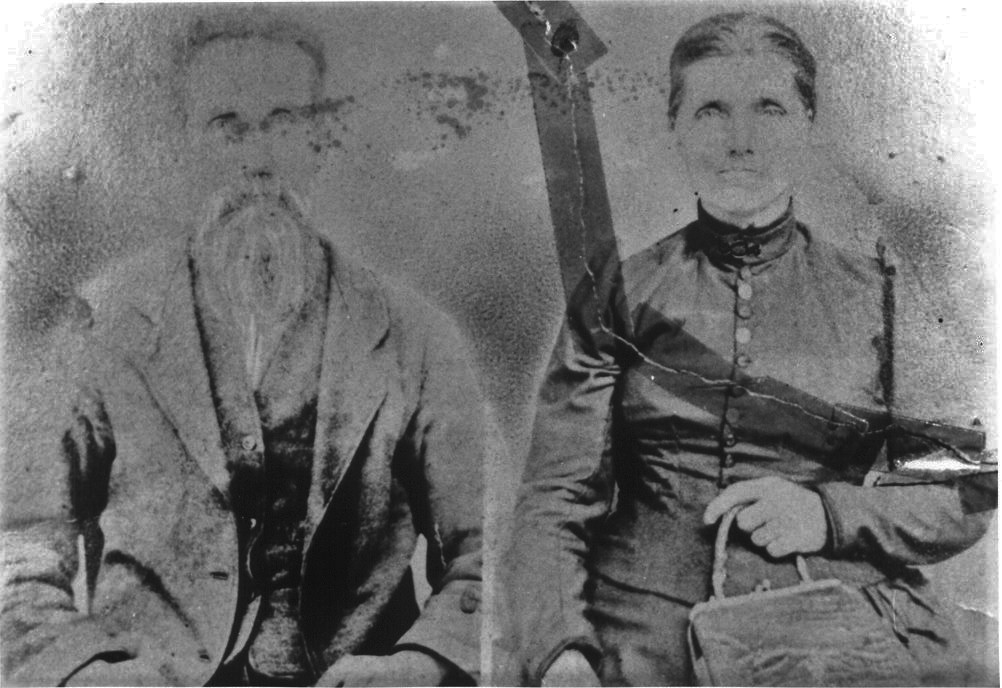
1880 United States Census
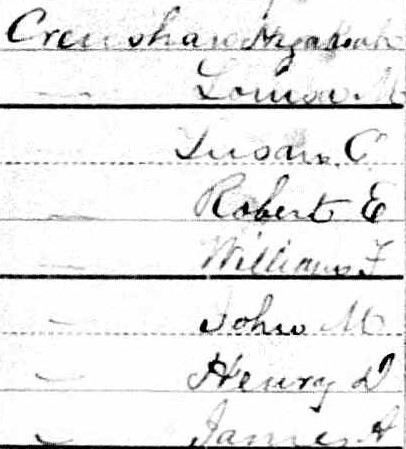
In 1880, Louisa M. Elbrook Crenshaw, 30, lived with her husband, Hezekiah Crenshaw, 41, and children Susan W., 12, Robert E., 11, William F., 9. John M., 6, Henry D., 4, and James A., 2, in Wagener, Oconee County, South Carolina. Hezekiah worked as a farmer with Robert’s help. Louisa kept house with Susan’s help. Susan and Robert attended school. Everybody was native to South Carolina. Name listed: Louisa Crenshaw5
Wagener, Oconee County, South Carolina
1900 United States Census
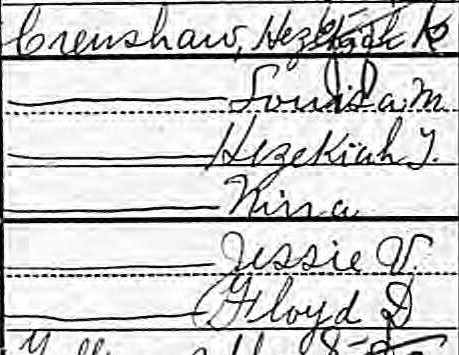
In 1900, Louisa M., 50 (born February 1850) and Hezekiah K. Crenshaw, 61 (born April 1839) lived with their sons Hezekiah J., 15 (born September 1884) and Floyd D., 7 (born March 1893), and daughters Nina, 12 (born February 1888), and Jessie V., 9 (born February 1891), on a farm they owned in Wagener, South Carolina. Louisa and Hezekiah had been married for 34 years and had 13 children, 10 of whom were still living. All family members, except for Louisa’s mother, were born in South Carolina; her mother’s birthplace was listed as Germany, though it might have meant that Louisa’s father was born in Germany and her mother in South Carolina. Hezekiah was a farmer and had been unemployed for three months in the previous year, while his son Hezekiah was a farm laborer but had been unemployed for eight months. The younger Hezekiah, Nina, and Jessie attended school the previous year, and everyone except the two youngest could read, write, and speak English. Name listed: Louisa M Crenshaw6
Death of Husband, Hezekiah K. Crenshaw – November 1, 1906
Louisa’s husband died on November 1, 1906. His obituary was published in the Keowee Courier:
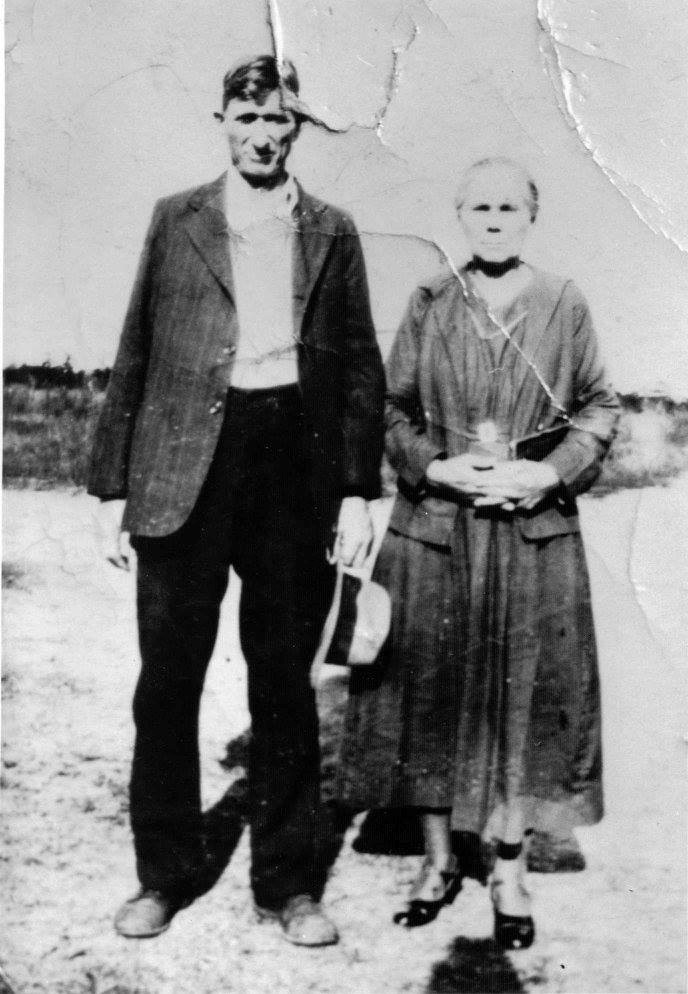
H. K. Crenshaw was born April 5th, 1889, and passed his reward at his home near Seneca, S. C., on November 1st, 1906. He was not a demonstrative man; he said but little; but such was his life that he won the confidence of those who knew him. But it is of the record that he made during the war between the States that the writer would like to say a word, for it was there that he showed most plainly his nobility of character. He was among the first to tender his services to the cause of the South and was one of that noble band of mountaineers who composed Company C, James L. Orr’s Regiment of Rifles, and during the long struggle was never known to to shirk a duty. Mr. Crenshaw participated in thirty-six different engagements, but never received a wound. When that noble chieftain, Gen. R. E. Lee, surrendered the remnant of his once noble army of veterans at Appomatox, it was suggested to a comrade, and we think the only man of that company besides himself who was with the company at its organization that were present that day, that as they had never surrendered to the enemy they would not do so then. So the two made their way to the river, cast their equipments into the stream and started for their homes in Oconee county, but were soon captured, and were put in prison for two months. Not long afterwards he was married to Miss Lou M. Elbrook, of Walhalla, S.C. To this union were born eleven children, ten of whom survive, twenty-six grandchildren, three brothers-Samuel Crenshaw, of Pelzer S.C., Newton Crenshaw, of West Union, S.C., and Thomas Crenshaw, of Newry, S.C., besides three sisters-Mrs. Sallie White and Mrs. J.M. Kelley, of Walhalla, S.C., and Mrs. C.D. Hill, of Cannon, Texas. Honor to his memory as a valiant soldier, affectionate husband, indulgent father and faithful friend, and when he saw the end had come he told his faithful wife that the way was clear and he had no fears. -C.D. Hill, Cannon, Texas.7
1910 United States Census
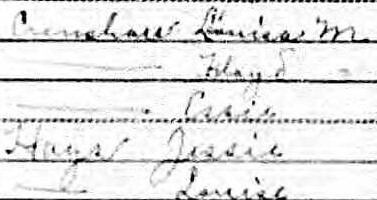
In 1910, a widowed Louisa M. was 60 and lived with her son, Floyd (17), granddaughter Essie (13), daughter Jessie Hays (19), and Jessie’s daughter, Louise, 22 months, at 26 Hammett Street, Varennes, Anderson, South Carolina. Ten of Louisa’s 13 children were living, and Jessie had one child. Jessie had been married for two years, although her husband was not listed in the record. Everybody was native to South Carolina except Louisa’s father, who was born in Germany. Floyd was a frame hand at a cotton mill and had been out of work for 18 weeks the year. Essie and Jessie were spinners at the cotton mill. Jessie worked the prior year, but Essie had not. Everybody could read and write, and Essie had attended school the year before. Name listed: Louisa M Crenshaw8
26 Hammett Street, Varennes, Anderson, South Carolina
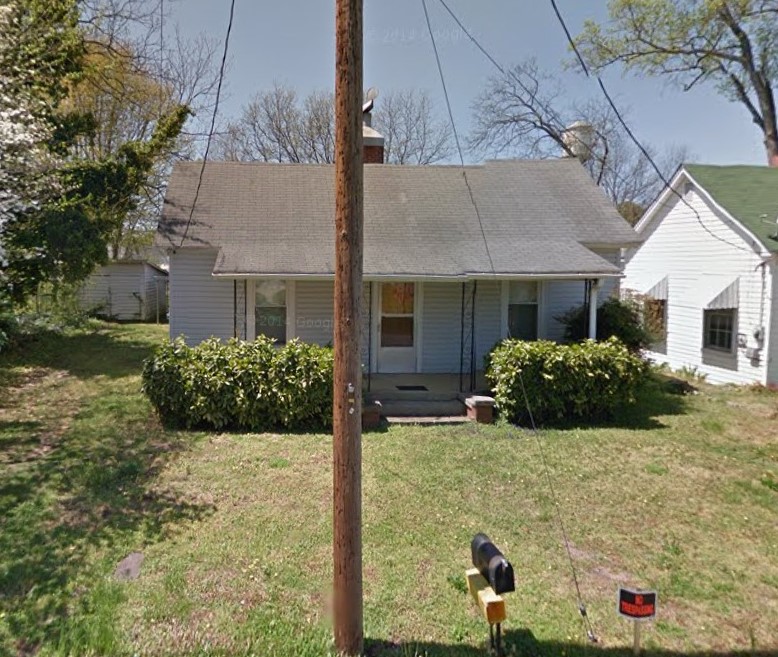
There isn’t much information available about the house at 26 Hammett Street, Anderson, South Carolina, and the house was recently removed.
1920 United States Census
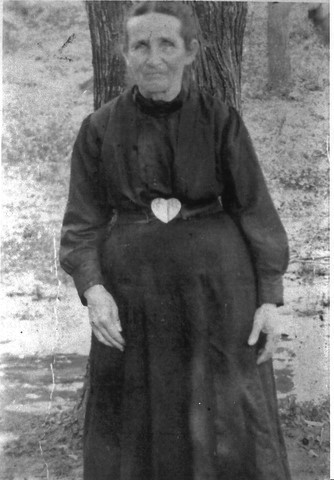
In 1920, Louisa I., 69 (last name listed Boener) lived with her son, Floyd Crenshaw, 36, and granddaughter, Edna Crenshaw, 32, on a rented farm in Wagner Township, South Carolina. Floyd was a farmer. Everyone could read, write, and speak English. Name listed: Louisa I Boener9
1925 – A Farewell Poem
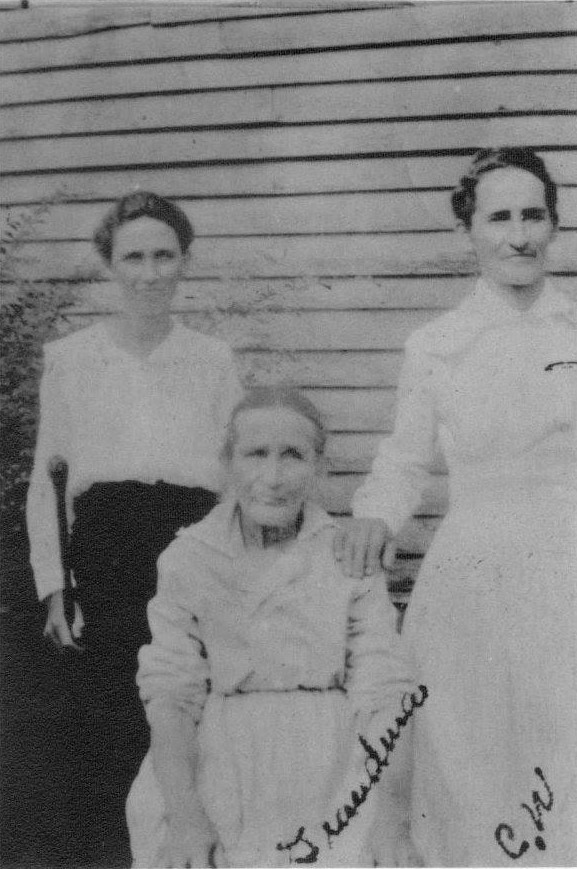
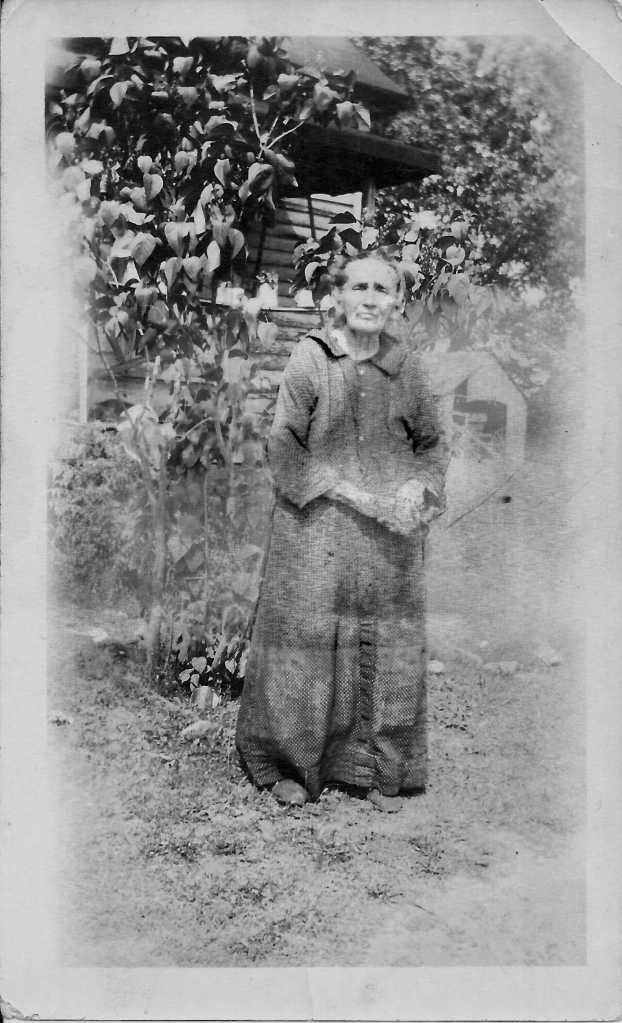
Louisa wrote a poem for her children on May 21, 1925, called “Farewell”:
Farewell – my dear children,
I am going away.
I have left home very often
But not to stay.

But this time I am going
To a country you see, where
I can’t come back to you
But you can come to me.

I have prayed for you daily,
That Jesus would lead
Your feet in the way,
That would lead you to me.

It is not far to Heaven –
It seems I can hear
The songs of the angels
As they gather near.

The voice of my Savior
To me sounds so near –
“Lord I am with you –
You have nothing to fear”,

To me you’ve been true
And Borne the reproach,
Of those who don’t know
The worth of my cross.

You have testified ever
To what I have done –
Saved and sanctified through
The blood of the crucified One.

When first you started
You counted the cost
And received the spirit
The dear Holy Ghost.

And now as I’ve asked
You to meet me up there
Now is the time for
Each one to prepare.

Repentance the first step
Each one must meet,
Get humble and low
At the dear Saviour’s feet –

Confessing you sin
Forgiveness implore –
And when you’re saved
You’ll hunger for more.

Just go to the Saviour
He understands –
And will lead you to know
What the spirit demands.

The Bible will teach you
It can’t be denied,
Cleansed through the blood
You’ll be sanctified.

And reaching up higher –
Not minding the cost
The promise is for you
THE DEAR HOLY GHOST.
Death of Louisa Myrtlelee Elbrook Crenshaw – March 31, 1933
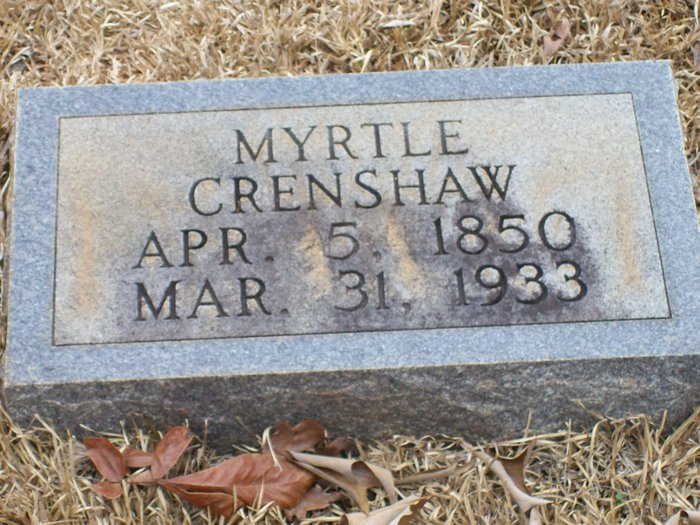
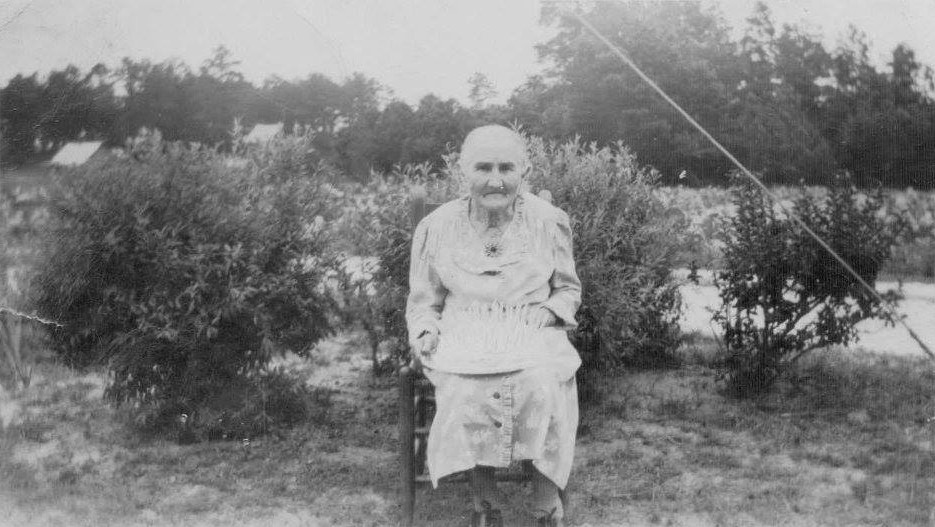
Louisa, widow of H.K. Crenshaw, passed away on March 31, 1933, at 7:45 PM in Wagner, Oconee County, South Carolina. She was 83 years old, having been born on February 18, 1850, in Charleston. Louisa had suffered from spinal arthritis since 1922, chronic endocarditis since 1928, and chronic interstitial nephritis since 1932, with endocarditis being the primary cause of death. Her occupation was listed as housekeeper, a role she fulfilled her entire adult life. Her parents were William Elbroocke, born in Germany, and Matilda Lindsey, born in Florida. The informant on her death certificate was her son, Mr. Fred Crenshaw of Ware Shoals.10
Obituary from The Greenville News, April 1, 1933
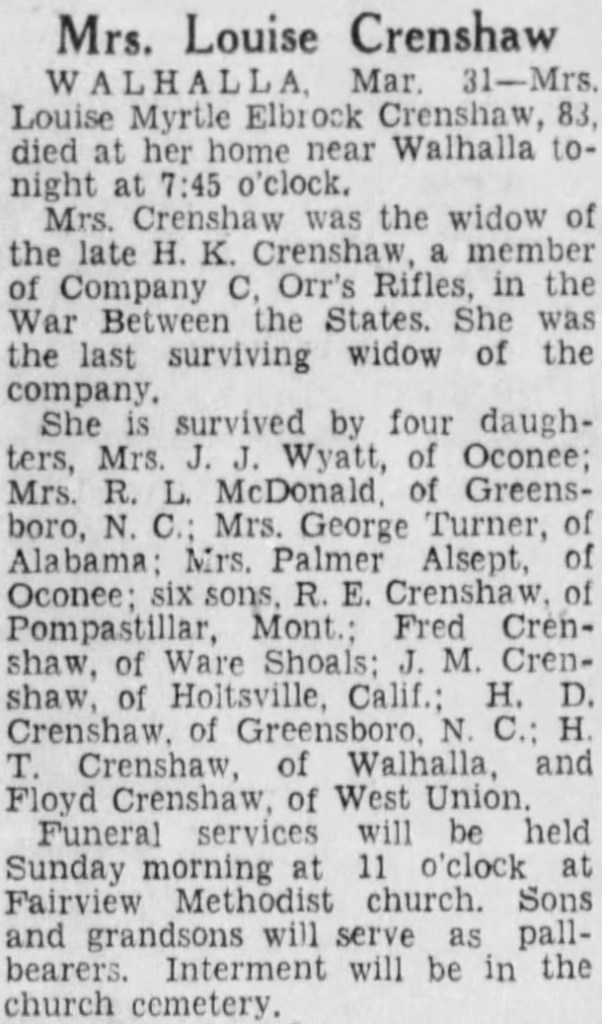
Transcription: "Mrs. Louise Crenshaw: Wallhalla, March 31 - Mrs. Louise Myrtle Elbrook Crenshaw, 83, died at her home near Walhalla tonight at 7:45 o'clock.
  "Mrs Crenshaw was the widow of the late H. K. Crenshaw, a member of Company C, Orr's Rifles, in the War Between the States. She was the last surviving widow of the company.
  "She is survived by four daughters, Mrs. J.J. Wyatt, of Oconee; Mrs. R.L. McDonald, of Greensboro, N.C.; Mrs. George Turner, of Alabama; Mrs. Palmer Alsept, of Oconee; six sons, R.E. Crenshaw, of Pompastillar, Mont.; Fred Crenshaw, of Ware Shoals; J.M. Crenshaw, of Holtsville, Calif.; H.D. Crenshaw, of Greensboro, N.C.; H.T. Crenshaw, of Walhalla, and Floyd Crenshaw, of West Union.
  "Funeral services will be held Sunday morning at 11 o'clock at Fairview Methodist church. Sons and grandsons will serve as pallbearers. Internment will be in the church cemetery."
Despite her health issues, Louisa remained dedicated to her work and family until her passing in Oconee County on March 31, 1933, leaving a legacy of resilience and dedication to her community and family.
Sources
- 1850 U.S. census, Charleston District, South Carolina, population schedule, Christ Church Parish, p. 377 (stamped), p. 756-57 (penned), dwelling 42, family 46, Louisa Ellerbrook, image, Ancestry (http://www.ancestry.com : accessed 5 April 2021), citing NARA microfilm publication M432, roll 850. ↩︎
- Mrs. Louisa (Elbrook) Crenshaw, transcript of “A Reminiscence,” Keowee Courier, 1930-1932, privately held by family and imaged, transcriber unknown. ↩︎
- “Record of Appointment of Postmasters, 1832-Sept. 30, 1971”, Oconee County, SC, Cannon District, Walhalla, SC, image, Ancestry (http://www.ancestry.com : accessed 5 April 2021), citing NARA microfilm publication M841, roll 115. ↩︎
- Official Register of the United States Containing a List of Officers and Employes in the Civil, Military, and Naval Service on the First of July, 1883, vol. 2, ed. J.G. Ames (Washington, DC: Government Printing Office. 1884), ps. 559, 590, 630, images, Ancestry (http://www.ancestry.com : accessed 5 April 2021). ↩︎
- 1880 U.S. Census, Oconee County, South Carolina, population schedule, Wagner Township, enumeration district (ED) 120, p. 187 (stamped), p. 22B (penned), dwelling 213, family 219, Louisa M Crenshaw, image, Ancestry (http://www.ancestry.com : accessed 5 April 2021), citing NARA microfilm publication T9, microfilm 1255236, roll 1236. ↩︎
- 1900 U.S. Census, Oconee County, South Carolina, population schedule, Wagener Township (in part), enumeration district (ED) 77, p. 233 (stamped), p. 6B (penned), dwelling 112, family 115, Louisa M Crenshaw, image, Ancestry (http://www.ancestry.com : accessed 5 April 2021), citing NARA microfilm publication T623, roll 1537, microfilm 1241537. ↩︎
- C.D. Hill, “In Memoriam – H.K. Crenshaw,” Keowee Courier, Pickens, SC, 5 December 1906, unpaginated, 5th page, col. 3, image, Newspapers.com (https://www.newspapers.com/article/keowee-courier/75024693/ : accessed 3 April 2021), clip page by user genistory. ↩︎
- 1910 U.S. Census, Anderson County, South Carolina, population schedule, Varennes Township, enumeration district (ED) 65, p. 160 (stamped), 3B (penned), dwelling 26, family 45, Louisa M Crenshaw, image, Ancestry (http://www.ancestry.com : accessed 5 April 2021), citing NARA microfilm publication T624, microfilm 1375462, roll 1449. ↩︎
- 1920 U.S. Census, Oconee County, South Carolina, population schedule, Wagener Township, enumeration district (ED) 148, p. 287 (stamped), 7B (penned), dwelling 131, family 131, Louisa I Boener, image, Ancestry (http://www.ancestry.com : accessed 5 July 2022); citing NARA microfilm publication T625, roll 1706. ↩︎
- “South Carolina, Death Records, 1821-1965,” image, Ancestry (https://www.ancestry.com : accessed 12 January 2021); record for Mrs. Myrtle Louise Crenshaw, 4 April 1933, Find a Grave (https://www.findagrave.com/memorial/66265076/louisa_myrtle-crenshaw: accessed 5 April 2021), memorial page for Louisa Myrtle Elbroocke Crenshaw (5 Apr 1850–31 Mar 1933), Find a Grave Memorial ID 66265076, citing Fairview Community Church Cemetery, Fairview, Oconee County, South Carolina, USA; Maintained by tdominguez (contributor 48647506); “Deaths and Funerals: Mrs. Louise Crenshaw,” The Greenville News, Greenville, SC, 1 April 1933, p. 6, col. 2, image, Newspapers.com (https://www.newspapers.com/article/the-greenville-news/36934276/ : accessed 9 October 2019), clip page by user genistory ↩︎
 Genistory