Peter Lazarevitz was born on December 15, 1859. He was born in Minsk, Belarus. At that time, it was part of the Russian Empire. Before that, it was the Grand Duchy of Lithuania. There, he married Sarah Halpern in Minsk in 1882. Four years later, in 1886, Peter immigrated to the United States with Sarah and their young son, Joseph, settling in Pittsburgh, Pennsylvania, bringing a strong entrepreneurial spirit. They initially used the last name, Lazarowitz.
Peter was a notable and ambitious figure in the early 20th century. He quickly established himself as a prominent businessman, engaging in several ventures that showcased his versatility and drive. By 1889, he changed the spelling to Lazarevitz.
Peter was deeply involved in charitable activities and religious organizations. He was a key figure in establishing the United Hebrew Relief Society, which he helped organize in 1890. This group helped out-of-work Jews in Russia resettle in the United States. Also in 1890, Peter and other community members founded Agudas Achim (Group of Brothers). His involvement in these groups demonstrated his dedication to preserving and nurturing his cultural and religious heritage.
Peter’s first major business venture was establishing a bank and steamship agency on Fifth Avenue, Pittsburgh. He co-founded it with Isaac Schaffer under the name Schaffer & Lazarevitz. This agency primarily served the local Russian and Polish Hebrew communities, providing essential financial services and facilitating travel for immigrants. Peter was known for his dedication to helping fellow immigrants. He went above and beyond to help his clients. He offered to write letters to Europe free of charge. He also sold ocean passage tickets on credit, allowing many families to reunite in America. His genuine care and commitment earned him the trust and respect of Pittsburgh’s Eastern European Jewish community.
Despite his initial success, the Panic of 1893 led to financial difficulties for many, including Peter’s business. Allegations of false pretenses and embezzlement emerged, which resulted in his arrest. These accusations created a public uproar among the local Russian Hebrew community. But it is important to recognize that Peter managed to protect his clients’ interests during such a tumultuous time. He reimbursed them whenever possible.
In 1902, Peter shortened his last name to Lazear. He ventured into real estate the following year. He made significant investments in properties in Pittsburgh. His involvement in real estate showcased his business acumen and desire to provide for his family and community.
Peter’s entrepreneurial spirit remained undeterred. Following a failed attempt to become an alderman, he and his family relocated to Atlanta, Georgia. Demonstrating his resilience and unwavering determination, he started a new venture, the Lazear Cigar & Company, alongside his son, Joseph. This chapter in his life showcased his ability to adapt and persevere, even in the face of adversity.
July 1887 Death of Infant Daughter, Issa
On July 23, 1887, Peter’s daughter, Issa Lazarowitz, passed away from cholera infantum after a three-day illness. Born on November 1, 1886, in Pittsburgh, Pennsylvania, Issa was just 8 months and 22 days old at the time of her death. She was laid to rest at Girty’s Run, a confluence that flows into the Allegheny River north of Pittsburgh. The family had lived at 50 Colwell Street, Pittsburgh, Pennsylvania, for four months.1
Formerly 50 Colwell Street, Pittsburgh, Pennsylvania
Formerly a vibrant neighborhood of rowhomes, 50 Colwell Street is now the 1000 block of Colwell Street. The plot is now taken up by a park near the entrance to the parking garage of PPG Paints Arena.
May 1889 First of Many Acquittals of Criminal Charges
On May 14, 1889, Peter, whose last name was spelled Lazarowitz, stood trial for embezzlement. Despite the accusations made by Hattie Lauberman, who claimed Peter misappropriated $37 intended to pay for her children’s passage from Harrisburg, Pennsylvania, he was acquitted of all charges. He faced serious allegations, but he proved his innocence. Although Peter was ordered to pay court costs, this incident marked the beginning of many unfounded claims against him during his time in Pittsburgh.2
November 1889 Peter Sues Business Rival for Slander
On November 29, 1889, Peter sued a business rival, A. Mozersky, for $25,000 in damages for slander. The article stated that Peter sold steamship tickets and drafts to Europe from his office at 258 5th Avenue, Pittsburgh, Pennsylvania. Mr. Mozersky had been telling people that Peter was dishonest, bankrupt, and planning to move back to Europe with $4,000-5,000 of other people’s money. Peter claimed that these statements were harmful to his business and sought compensation equivalent to a year’s cost of business.3
1890-92 Pittsburgh City Directory
In 1890, Peter was listed in the Pittsburgh Directory at 223 5th Avenue, running a foreign exchange business and serving as a steamship and railroad ticket agent. His brother, Louis Lazarevitz, a tailor, was also listed at this address. The earliest record of Peter in the Pittsburgh Post, from April of that year, notes that he was assessed $9 in taxes for his ticket agent business.4 Another brother, Meyer, was a cigar maker in the 1891 directory. By 1892, Peter had partnered with Schaffer, and their business, Lazarevitz & Schaffer Co., opened a second office at 1112 Carson Street in the southern section of the city.5
3 PNC Plaza, Formerly 223 5th Avenue, Pittsburgh, Pennsylvania
The block that used to contain 223 5th Avenue, Pittsburgh, Pennsylvania, is now a large skyscraper, 3 PNC Plaza.
1113 East Carson Street, Pittsburgh, Pennsylvania
Now known as 1113 East Carson Street, there is no publicly available information about when this building was constructed. The original building has the words “Ukrainian Home” etched onto its facade. There was no information about this place in Pittsburgh newspapers, either. The building currently houses Victory Pointe Arcade.6
1890 Entering the Foreign Exchange Business
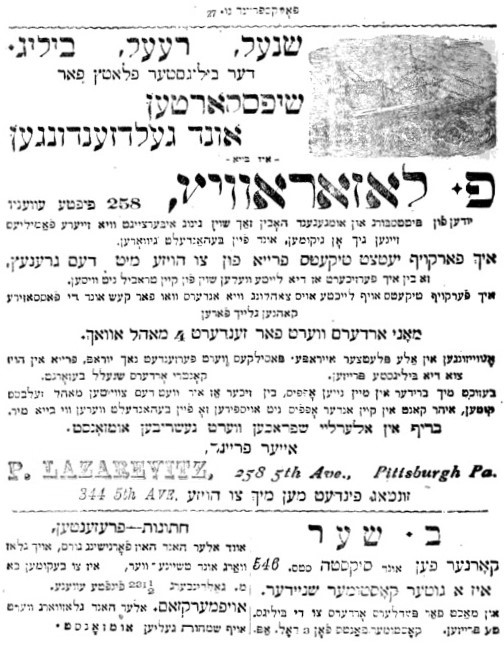
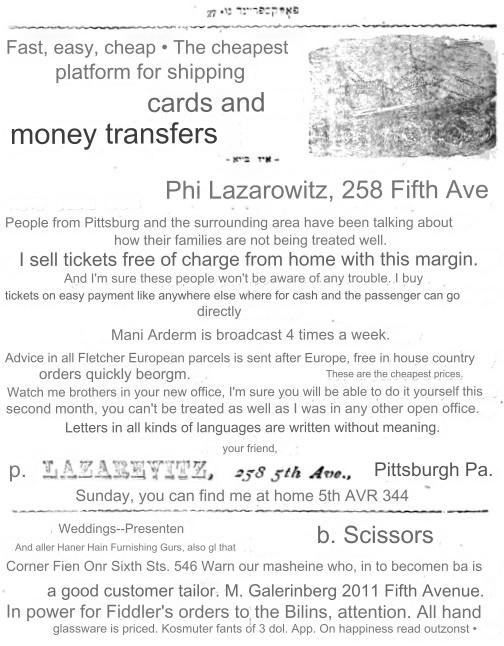
Jacob S. Feldman was a historian native to Ellwood City, Pennsylvania, who wrote two books about the history of Jewish people in Pittsburgh, Pennsylvania. He interviewed Peter’s brother, Max. He wrote about Peter Lazarevitz (later Lazear) and his involvement in the foreign exchange business in Pittsburgh. In 1899, Peter and a competing agent, A. Mozersky, began advertising their foreign exchange agencies in the Volksfreund, a new Yiddish weekly printed in Pittsburgh. They primarily solicited business from the local East European Jewish community, among whom they lived.
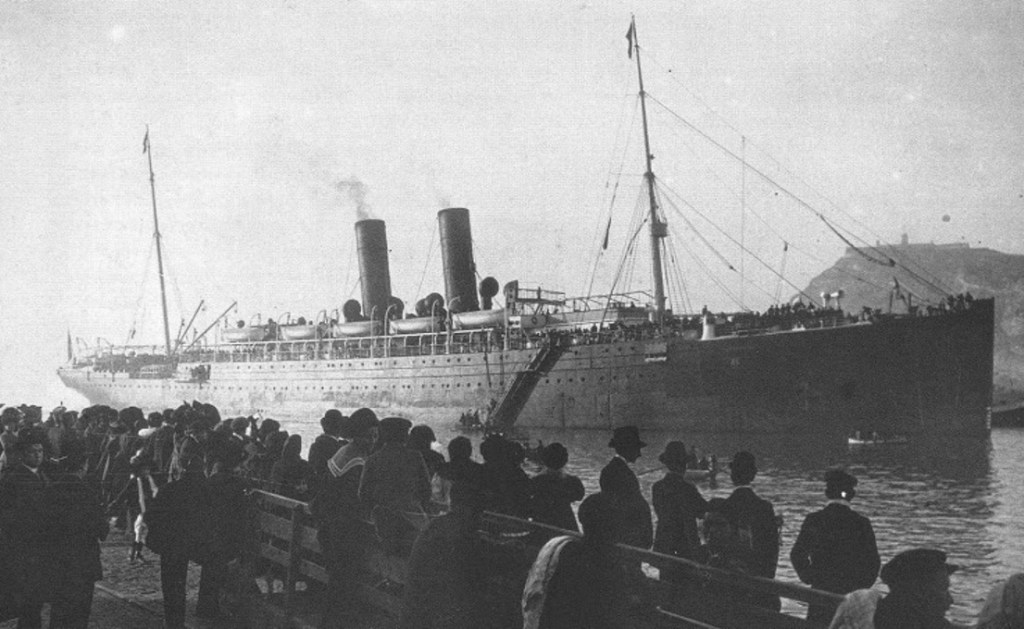
Peter, a Lithuanian Jew from the province of Minsk, was very ambitious and accommodating. He established his office on Fifth Avenue and offered several services to his clients. For any client, he would write letters to Europe free of charge. If they were short on money, he would sell them ocean passage on credit, allowing them to repay in installments. Although his office was closed on Sundays, Peter would conduct business from home.
Peter’s accommodating nature and the trust placed in him by the Eastern European Jewish community allowed him to expand his agency. He took in Isaac Schaffer as a partner and opened a second office to cater to the Polish immigrants in Pittsburgh. Despite new agents trying their luck in the lucrative foreign exchange business, more Jews dealt with Lazear due to his reliability and supportive approach.9
1890 Founding of Agudas Achim
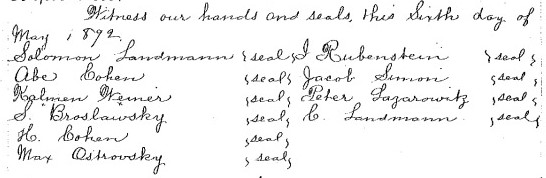
In 1890, a group of Lithuanian Jews in Pittsburgh formed their own Congregation called Aguda Achim. Peter was among the charter members. According to Feldman, the Russian community in Pittsburgh established their own Orthodox congregation, Beth Abraham, as early as 1882. In 1890, some members, including Peter Lazear from Minsk, broke away to form a new congregation called Agudas Achim (Group of Brothers). The membership of these new local synagogues aligned with Eastern European regional borders.11
August 1890 Founding of the United Hebrew Relief Association
In response to the czar of Russia’s edict to expel all Jews from Europe, Peter founded and became the secretary of the United Hebrew Relief Association. On August 28, 1890, he held a meeting at his office to gain support for the group. The society aimed to raise money to help poor but capable Jews immigrate to the United States and find work across the country. Many Jews had been forced out of work and had to sell their land for half its estimated value. The group sought to pay the passage for men of all classes, including physicians, lawyers, rabbis, actors, merchants, mechanics, and farmers who could no longer afford to live in Russia. They would not pay the passage for paupers, criminals, or those who did not need assistance, nor did they intend to fund a charity to establish a poor house. They had already aided some professional men and actors. The society charged every member $5 to join and had already gathered 200 members.12 By early October, two men and their families had arrived and stayed with host families in Pittsburgh, while another dozen families had applied for assistance. The group was making arrangements to accommodate them.13
On March 22, 1891, they announced a plan to consolidate their group with the Jewish Alliance Association, as both organizations shared the same mission.14 However, according to Feldman, the merger did not occur:
  Many of the new settlers needed assistance from the local Jewish community during the early 1890's. Peter Lazear then still had a good reputation and was emerging as a leader among his people. On November 6, 1890, he led a score of Yiddish-speaking men into the Clerk of Courts Office. They had formed the United Hebrew Relief Society of Allegheny County. Now a charter was being prepared stating:
  "Object shall be to render aid... to the Hebrew emigrants and their families that may come to Pittsburgh and its vicinity to furnish them with relief if destitute and to perform other acts of benevolence as circumstances may require."
  Each member was to contribute fifty cents per month, and income was also to be obtained from charitable contributions. Peter Lazear first signed his name on the charter, followed by Jacob Glick of the Volksfreund, Gutman Caplan who was later president of the Beth Jacob Synagogue, and many others.
  This society of 150 members evidently gave the most help for needy Jewish newcomers. But overlapping organizations authorized to perform the same functions existed. The old Hebrew Benevolent Society had merged with the Ladies Aid Society under the name, United Hebrew Relief Association. Not to be confused with Lazear's society, this group was controlled by the Jews belonging to the Rodef Shalom and Tree of Life Synagogues...
  On March 22, 1891, a great meeting was held at Miller's Hall... to discuss merging the Jewish Alliance Branch with Lazear's United Hebrew Relief Society. P. Sandomere, William Hoffman, and Peter Lazear, who served as secretary, each gave enthusiastic speeches. Nevertheless, no merger was accomplished (1959).15
The organization tried to find jobs for immigrants, provided them with cigar makers' tools, guaranteed a wholesale payment for their peddler's goods, and helped with food and lodging (1986).16
July 1892 Another Lawsuit, Another Acquittal
On July 5, 1892, Joseph was acquitted of larceny, accused by Joseph Kline of retaining goods “under the pretense that there were railroad charges on them to pay.”17
December 1892 Peter as Plaintiff
On December 23, 1892, a trial took place following Peter’s accusation that G. Albert had sold his horse and misappropriated the funds. Although Albert was acquitted of the charges, he was ordered to pay the court costs.18
1893 Pittsburgh Directory
In 1893, Peter moved to 406 5th Avenue, Pittsburgh, Pennsylvania, but kept his office at 223 5th Avenue. He was now listed as a notary instead of a ticket agent, and the firm was named Schaffer & Lazarevitz. His brother Louis (spelled Lewis Lazarewetetz) had moved in with their other brother, Meyer.19 An advertisement in English for Peter’s business appeared in a book about the history of Pittsburgh and the surrounding area during this year. In this listing, he suggests that people could also book fares to Europe for travel.20
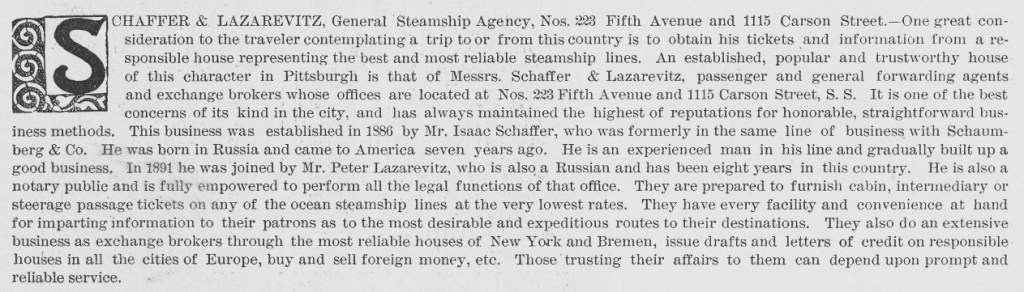
Schaffer & Lazarevitz, General Steamship Agency, Nos. 223 Fifth Avenue and 1115 Carson Street.-One great consideration to the traveler contemplating a trip to or from this country is to obtain his tickets and information from a responsible house representing the best and most reliable steamship lines. An established, popular and trustworthy house of this character in Pittsburgh is that of Messrs. Schaffer & Lazarevitz, passenger and general forwarding agents and exchange brokers whose offices are located at Nos. 223 Fifth Avenue and 1115 Carson Street, S.S. It is one of the best concerns of its kind in the city, and has always maintained the highest reputations for honorable, straightforward business methods. This business was established in 1886 by Mr. Isaac Schaffer, who was formerly in the same line of business with Schaumberg & Co. He was born in Russia and came to America seven years ago. He is an experienced man in his line and gradually built up a good business. In 1891 he was joined by Mr. Peter Lazarevitz, who is also a Russian and has been eight years in this country. He is also a notary public and is fully empowered to perform all the legal functions of that office. They are prepared to furnish cabin, intermediary or steerage passage tickets on any of the ocean steamship lines at the very lowest rates. They have every facility and convenience at hand for imparting information to their patrons as to the most desirable and expeditious routes to their destinations. They also do an extensive business as exchange brokers through the most reliable houses of New York and Bremen, issue drafts and letters of credit on responsible houses in all the cities of Europe, buy and sell foreign money, etc. Those trusting their affairs to them can depend upon prompt and reliable service.
The Panic of 1893
The Panic of 1893 was a severe economic depression in the United States that began in 1893 and lasted until 1897. Triggered by the collapse of the Philadelphia and Reading Railroad and the National Cordage Company, the panic led to bank failures and a stock market crash. Overextended railroads and diminishing European investment due to financial troubles abroad exacerbated the crisis. This economic turmoil resulted in the closure of over 15,000 businesses and widespread unemployment, with the national unemployment rate soaring to approximately 20%. The Panic of 1893 had profound and lasting impacts, leading to significant social and political changes, including the rise of the Populist movement and demands for monetary reform.21 These events had lasting consequences on Peter’s professional and personal life.
August 1893 Opera Ticket Fiasco
On August 6, it was reported that Peter had written a $25 check to two members of a Hebrew opera company in exchange for $50 worth of opera tickets. When they failed to provide the tickets, Peter had them arrested on charges of false pretenses. The men, however, claimed that when they attempted to cash the check, Peter’s account lacked sufficient funds, making them reluctant to trust him with the tickets. They planned to bring countercharges against him for damages and false arrest.22 In response, Peter withdrew the suit the same day and paid the court costs.23
September 1893 Another Ticket Fiasco
The issue with the opera tickets was the first sign of trouble for Peter’s business, but things soon worsened significantly. On September 23, 1893, a man reported to the Pittsburgh Police that he had purchased a $35 ticket from Bremen to Pittsburgh and sent it to a relative in Germany. However, when the relative presented the ticket to the Bremen steamship, he was told it was worthless and was advised to file charges against the ticket seller.24
That same day, a banker named Weinberger in New York City announced that his firm had failed. Of the $4,972 that Schaffer & Lazarevitz was worth, $4,000 was tied up with the Weinberger firm. This forced them to transfer all their property and funds to Peter’s father-in-law, Godel Halpern, who could cover the costs for the benefit of depositors and creditors. Despite these challenges, Schaffer & Lazarevitz, who typically dealt with small deposits and foreign exchange, promised to pay all their creditors in full.25
The events that followed were widely reported across the country, leading to considerable chaos. The following are local stories from Pittsburgh and New York City.
“TRIED TO KILL THE BANKER: Peter Lazarevitz in Jail to Escape Hebrew Mob: STEAMSHIP TICKETS WERE BOGUS: He Is Charged With Victimizing Russian Refugees: THEIR LOSSES RUN INTO THOUSANDS.”
From the Pittsburgh Post, September 27, 1893:
  Peter Lazarevits, the Russian Hebrew Banker at 233 Fifth avenue, is in jail both for the public weal and his own safety. There are four charges of false pretense and one of embezzlement against him. The informations allege that he has victimized nearly all the Russian Hebrews on the hill, and that the amounts will run into the thousands before investigations cease. The bail now demanded for him is $2,500 and by to-day it may be trebled. Last night there was an angry throng of ex-Russian refugees clamoring at Alderman McCarthy’s office to make more informations against the banker. A dozen or more of the informations will likely be taken this morning.
  Peter Lazarevitz has for some time conducted a Russian and Polish Hebrew bank and steamship agency at 233 Fifth avenue. The firm name was Schaeffer & Lazarevitz. Last Friday the bank closed its doors. The cause assigned was that the New York branch of the firm had failed. Then it was that the depositors and patrons of the steamship agency began to find out that tickets they had purchased from Lazarevitz and sent to friends in Europe were bogus. Every mail brought back fresh news of tickets that had been refused by steamship agents or of remittances sent to Russia through this bank that never reached their destination. On Saturday the first suit was entered before Alderman McCarthy. Before the constable could find the defendant the latter had found the plaintiff and settled the case.
  On Monday the cases came in thick. Nearly all the patrons of the place are Russian exiles who are engaged in peddling or making cigarettes. Abraham Smilewitz gave $63 for tickets for a boy and girl from Hamburg to America. He then paid $8 extra to bring them from Bremen. The tickets were pronounced bogus by the steamship agent. Louis Miller gave Lazarevitz $35 for a ticket from Bremen. It was refused. Solomon Schnaeirow paid for tickets for his wife and four children from Hamburg to Pittsburgh. They went from Russia to Hamburg where the tickets were refused and his family is starving in Germany. Simon Levin gave up $27 and had the same experience. Jacob Berman sent $180 through the bank to friends in Russia and it never reached there, the draft being refused.
  Yesterday afternoon Lazarevitz appeared at Alderman McCarthy’s office with his bondsmen. Some hearings were in progress then and the banker had to wait. In the meantime the Hebrews heard he was there and marched on the office in a body. Lazarevitz was brought in and set down behind the alderman’s desk in order to protect him. The Russian exiles became unruly and it looked for a time as if the prisoner’s life was in danger. One Hebrew pushed back of the rail and threatened to kill Lazarevitz. He was held back and one of the office men crawled out of a back window and secured police aid. The alderman believed Lazarevitz would be safer in jail than outside and refused to take the bail until he investigated the safety of the bondsmen. The policemen held back the mob while the banker was taken to jail.26
“ARRESTED BY CREDITORS: Lazarevitz, the Insolvent Banker, Followed by a Mob”
From the Pittsburgh Press, September 27, 1893:
  Peter Lazarevitz, the junior member of the Russian Hebrew banking firm of Schaffer & Lazarevitz at 233 Fifth avenue, which suspended business Friday last, was arrested and dragged to Alderman McCarthy’s office by a crowd of angry creditors.
  The prisoner was followed by a crowd of nearly 1,000 angry, excited people. When dragged into the alderman’s office he fell exhausted on the floor, while depositors who had assumed the duties of arresting officers, attempted to explain what they wanted done with him. The crowd outside clamored for admittance and the alderman refused to hear the complaint until he had summoned the police to assist him keeping order.
  Lazarevitz was then charged before the alderman in three cases with false pretenses in agreeing to furnish steamship tickets from Bremen, Germany, to Pittsburg, by way of New York. In each of the three cases it was alleged that he had accepted $35 and had not supplied the tickets. He was also charged in two cases with embezzlement in receiving money after knowing his bank was insolvent. The alderman fixed bail in each case at $5,000.
  W.H. Hoffman immediately offered to go the prisoner’s bail, but as the crowd surrounding the office became more and more excited, Alderman McCarthy refused to accept it for fear the crowd would kill the prisoner if released.
  Lazarevitz’s wife and daughters managed to get into the office and added to the hubbub by clinging to the prisoner’s neck, screaming and demanding his release. Finally sufficient assistance was obtained and Lazarevitz taken aboard a street car and landed in jail. A number of people called at the alderman’s office and wanted to make charges against the broken banker, but as they were not accompanied by the proper evidence the squire refused to accept them.27
“ARRESTED BY HIS CREDITORS: Peter Lazarevitz’s Narrow Escape from an Angry Mob”
From the Evening World, New York, New York, September 27, 1893:
PITTSBURG, Pa., Sept. 27.-Peter Lazarevitz, junior member of the Russian Hebrew banking firm of Schaffer & Lazarevitz, which suspended Friday last, was arrested at his home yesterday by several of his creditors.
Without a warrant he was taken to Alderman McCarthy’s office, being followed by nearly 1,000 angry and excited people. Lazarevitz was charged before the Alderman in three cases of false pretense and with embezzlement, but the alderman would not accept it. Bail was fixed at $250, but the Alderman would not accept it, as he was afraid the crowd would assault Lazarevitz.
The Alderman and two policemen with Lazarevitz forced their way through the crowd, boarded a street car and lodged the prisoner in jail.
W.H. Hoffman, who wished to enter bail for Lazarevitz, says he will enter proceedings against Alderman McCarthy charging him with misdemeanor in office for refusing to accept bail.
Schaffer & Lazarevitz were the Pittsburg correspondents of Banker Bernard Weinberger of this city. Their failure was not precipitated by Weinberger’s defalcations. Lawyer Jaworower, attorney for the latter’s creditors, said today. On the contrary, Weinberger’s books show that the Pittsburg concern is indebted to him for several hundred dollars.28
“BANKER SCHAFFER MISSING: Charges of Fraud and Civil Actions by the Wholesale”
From the Pittsburgh Press, September 28, 1893:
  A half dozen constables who had warrants for the arrest of Isaac Schaffer, of the firm of Schaffer & Lazarevitz, the Hebrew bankers, failed to find their man yesterday. His disappearance has increased the anger of the creditors of the bank. A crowd of them called on Alderman John Cahill and said they had information that Schaffer was either in Troy, Mich., or Troy, N.Y., and said they were willing to form a pool to provide finds to bring him back to Pittsburg. They were advised as to the law and concluded to send their strongest cases to the grand jury as early as possible.
  Seven additional informations were made before Alderman Cahill yesterday against the members of the firm. Abraham Amiszey, Wladyslaw Pozycki, Thaddeus Barteleski and F. Waitkeviski charge them with false pretenses in certain steamship transactions. They have lost from $35 to $70. Martin Benjeyniski, Antonio Lesazisuski and J. Kuhn charge them with embezzlement in accepting money for deposit in their bank when they knew that they were insolvent. Their losses range from $50 to $200.
  Jacob Brodi made a charge of embezzlement against the bankers before Alderman J.A. Donovan. Five more informations for embezzlement were made before Alderman W.C. McCarthy and seven before Alderman John Gripp.
  A landlord’s warrant was issued by Alderman McMasters yesterday against the effects of the bankers in their office at No. 223 Fifth avenue, and a notice of a constable’s sale is now posted on the door.
  Lazarevitz is still in jail and likely to stay there, for bonds and for many thousands of dollars are required to get him out, so many commitments have been lodged against him. Alderman S.R. Richards has 42 civil suits for debt against the bankers, all entered by depositors.29
The following day, five additional charges of embezzlement were lodged against Peter.30 A month later, Peter’s father-in-law was removed as the assignee of Schaffer & Lazarevitz after a creditor claimed that he had failed to take action to protect the assets or prevent them from being wasted.31 Soon after, each case against Lazarevitz was dropped as he repaid each creditor before trial.32 However, new claims continued to be filed against him.33
On November 22, 1893, it was announced that Isaac Schaffer and Peter Lazarevitz were found not guilty of embezzlement. The prosecutors had left the city, as most cases against them had been settled.34 When the case was brought before a grand jury in January 1894, the jurors dismissed it, likely due to insufficient evidence for an indictment or because Schaffer and Lazarevitz had already settled with their creditors.35
For the next four years, Peter completely vanished from public records, including newspapers and the city directory. He did not reappear until 1897 when the depression ended.
Jacob Feldman documented that the East European Jewish community had placed significant trust in Peter Lazear. However, when the Panic of 1893 struck, Lazear’s agency suddenly went bankrupt, and rumors spread throughout Pittsburgh that he had swindled his clients out of thousands of dollars by not turning over their money to banks and steamship lines. Lazear and his partner, Isaac Schaeffer, disappeared from public view.
The day after his offices closed, a lawsuit was brought against Lazear before an alderman, but Lazear managed to privately settle the case with the plaintiffs before the constable could find him. Despite this, new lawsuits began to pour in from Jewish peddlers and tobacco workers on the following Monday. A large group of distraught Jews and Poles even broke into his office, prompting the police to protect him.
Pressing charges against Lazear proved challenging because witnesses were still in Europe, and local immigrants who had previously arrived in Pittsburgh could not claim any dishonesty on his part. Generally, Lazear and other agents had been considered reliable. However, with his prestige temporarily destroyed, Lazear never returned to the foreign exchange business. By 1899, he had transitioned to selling insurance for New York Life.36
December 1897 Peter Elected President of the Eleventh Ward
In 1897, Peter resided at 1819 Bedford Avenue, Pittsburgh, Pennsylvania, and worked as an insurance agent.37 In December, it was announced that Peter had been elected president of the independent party of the Eleventh Ward, with his father-in-law, Godel Halpern, serving as financial secretary.38
Formerly 1819 Bedford Avenue, Pittsburgh, Pennsylvania
The home previously located at 1819 Bedford Avenue is no longer standing.
1898 Pittsburgh Directory
In 1898, Peter lived at 1921 Webster Avenue, Pittsburgh, Pennsylvania, and continued to work as an insurance agent. His brother Meyer, a clerk, also resided at this address. Peter’s office was located in suite 409 of the Park Building at 355 5th Avenue, Pittsburgh, PA.39
The house currently located at 1921 Webster Avenue was built in 1900.40 Peter may have been the last resident of the previous home located there.
The Park Building, Pittsburgh, Pennsylvania
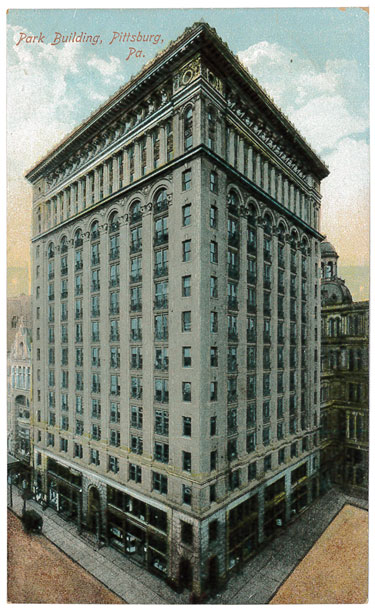

Built in 1896, this building is the only nineteenth-century skyscraper that is still standing in Pittsburgh.43
February 1898 Peter and Sarah Victims of Theft
On February 8, 1898, Peter and Sarah Lazarevitz attended a wedding. As they were leaving, Sarah discovered that her cape was missing. The bride and groom also reported that a pillow was missing from their bridal bed. Police issued a warrant, and on March 17, 1898, the items were found in the home of another attendee, Mrs. Delia Burns.44 After a hearing the next day, Mrs. Burns was released from custody.45
June 1898 Peter Certified as Notary Public
On June 27, 1898, Peter was officially certified as a Notary Public in Pittsburgh.46
1899 Pittsburgh Directory
In 1899, Peter, listed worked as a notary and lived at 1416 Colwell St., Pittsburgh, Pennsylvania. He moved his office to suite 424 of the Park Building.47
April 1899 Custody Dispute Over Peter’s Niece, Fannie
On April 10, 1899, Peter filed a writ of habeas corpus against Lizzie Katuzinik to gain custody of his niece, Fannie Lazarevitz. After Fannie’s mother passed away and her father, Peter’s brother Louis Lazarevitz, became a wanderer and could not be located, Peter claimed that neither Lizzie nor Louis could properly care for Fannie. He alleged that Lizzie planned to institutionalize Fannie and let her wander the streets, causing her to become an outcast. Peter asserted that his brother-in-law, Louis Gorfinkell, who was married to his sister Celia, had the means and willingness to take Fannie in.48
The reporting on the hearing caused confusion. The report mistakenly listed Fannie as Peter’s 8-year-old daughter instead of his niece. The woman with custody was named Mrs. Lizzie Loss or Katuzink, though no further records about Lizzie Loss exist, and the last name Katuzink appears nowhere in records. It was reported that Peter had previously signed papers giving Lizzie absolute control of Fannie and that she had considerable means. Lizzie claimed she was willing to adopt Fannie but did not want to be forced through legal proceedings. The case was allowed to proceed, and Lizzie was to present her petition for adoption the following Saturday.49
There were no further reports on the matter. If Fannie was 8 years old, she would have been born around 1891, but no records of a Fannie or Frances Lazarevitz, Lazarowitz, Katuzink, or Loss born around this time exist. Later records reveal that Peter had a daughter named Frances Lazarevitz/Lazear, who sometimes went by Fannie and used different birth dates, ranging from 1886 to 1889.50 It is possible that Peter adopted Fannie and raised her as his daughter. Peter’s brother Max also had a daughter named Fannie, but she was born in 1895 and was likely too young to be the girl in question.51 Their mother was named Fannie, so the brothers may have named their daughters in her honor.52 Fannie does not appear in the records for Louis and Celia Lazarevitz Gorfinkell.53
1900 United States Census
In 1900, Peter, 36 (born December 1863), lived with his wife Sarah Lazarevitz, 33 (born January 1869), and their children: Joseph, 17 (born October 1882), Fanny, 14 (born February 1886), Celia, 11 (born March 1889), and Julius, 9 (born October 1890). They also had a boarder, D. Isaac Poglin, 35 (born November 1864). The family rented a home at 138 Crawford Street, Pittsburgh, Pennsylvania.
Peter and Isaac worked as insurance agents, while Joseph, Fanny, and Celia attended school. Peter, Sarah, Joseph, and Isaac were born in Russia, also to Russian-born parents. Peter, Sarah, and Joseph immigrated from Russia in 1886 and had been in the United States for 14 years. Isaac immigrated from Russia in 1880 and lived in the US for 20 years. Peter was naturalized.
Peter and Sarah had been married for 18 years and had five children, four of whom were alive. Everyone in the household was literate in English, capable of reading, writing, and speaking it fluently.54
Formerly 138 Crawford Street, Pittsburgh, Pennsylvania
The former 138 Crawford Street is now located in the parking lot of City View Apartments.
May 1901 A Loss in Court
On May 15, 1901, it was reported that Peter and Sarah Lazarevitz were sued by C.M. Berkey and were ordered to pay $250, though no further details about the case were provided.55
December 1901 Peter Named Head of Insurance Agency
On December 19, 1901, Peter inaugurated a new independent branch of New York Life at his office on 5th Avenue. Named the Duquesne Branch, Peter assumed the role of general agent and took charge of the agency.56
1902 Philadelphia Directory
In 1902, Peter resided at 1638 Colwell Street, Pittsburgh, Pennsylvania, where he operated his notary business from home.57
1638 Colwell Street, Pittsburgh, Pennsylvania
Once a bustling neighborhood, 1638 Colwell Street is one of the last remaining houses on the block. It was built in 1900 and is a multifamily house.58
1200 Fifth Avenue, Pittsburgh, Pennsylvania
1200 Fifth Avenue is now a parking lot across the street from PPG Paints Arena.
January 1902 Bankruptcy
On January 10, 1902, Peter filed for bankruptcy while still affiliated with his company, Schaffer & Lazarevitz, an insurance agency. He reported $2,323 in liabilities and $4,244 in assets, with $4,019 of the assets tied up in outstanding accounts.59
February 1903 Mayoral Election of Pittsburgh
Peter joined a coalition of prominent Hebrew business owners and professionals in Pittsburgh inf February 1903 to advocate for the election of Democrat John C. Haymayer.60
1903 Recreation Activities
On July 19, 1903, Peter and Sarah stayed at the National Hotel in Cambridge Springs, Pennsylvania.61 Famous for its mineral springs, the hotel was a popular destination for Jewish travelers from Pittsburgh in the early 20th century.62
On September 12, 1903, Peter and many members of his family attended a classical music performance. It was the last night in Pittsburgh for the popular musician Creatore.63
April 1903 Incorporation of Fifth Avenue Realty Co.

On March 13, 1903, it was announced that Peter, S. Goldstein, Julius Stern, and L. Gratz formally incorporated Fifth Avenue Realty to offer real estate and insurance services. Peter assumed the roles of manager and treasurer within the business. Although the official opening was slated for April 1, 1903, Peter had already engaged in real estate transactions, starting with the purchase of a home from his brother in July 1902.65 A few days after the initial article was printed, Peter placed an advertisement in the Pittsburgh Press to hire a solicitor for the business.66
In June of this year, Peter purchased a house at 2435 Center Avenue, Pittsburgh, Pennsylvania, through his agency for $8,700. He planned to make extensive improvements to the property.67
Formerly 2435 Center Avenue, Pittsburgh, Pennsylvania
2435 Center Avenue (now Centre Avenue) is a vacant lot.
July 1903 Business Dispute
On July 10th and 11th, a notice was placed in every Pittsburgh newspaper stating that Isidore Goldstein was no longer a shareholder in Fifth Street Realty and had no connection with the business.68
On July 14, James O’Kane sued Peter, though no details were posted.69 The defendant was listed as “P. Lazear, et al.” This probably included the other shareholders with Fifth Street Realty. After approximately 20 real estate transactions were recorded in local newspapers with Peter as the agent, no additional articles listed him after that day. Dozens of sales continued to be posted for the business, and Peter continued to be manager.70
On September 24, Peter filed a lawsuit against Leon Krieger.71 Further details emerged on October 7, revealing that the partners of Fifth Avenue Realty—Peter, Julius Stein, and Louis Gratz—were suing Isidore Goldstein. They alleged that Goldstein took more than his fair share of the profit from selling a property to Krieger. They had purchased a property for $13,000 and sold it for $14,000, making a $1,000 profit to be divided equally among the shareholders. However, Goldstein kept $412.66 of the profit for himself. In response, Goldstein claimed he had a verbal agreement with the other partners to receive a higher share from this sale because he was withdrawing all of his interest from the firm and insisted that he did not commit fraud. He said he would rather go to jail than pay back the partners.72 No information was provided about the case resolution.
On April 3, 1904, George C. Norris & Co., which had been in business for 12 years, purchased Fifth Avenue Realty, including the real estate, renting, and insurance business, as well as its furniture and fixtures. They also hired Isidore Goldstein and Julius Stein, formerly of Fifth Avenue Realty, as salesmen.73
November 1903 Peter Becomes Candidate for Thirteenth Ward Common Council
On November 8, 1903, Peter announced his candidacy for the Common Council of the Thirteenth Ward, anticipating an endorsement from the Republicans. He was known as a diligent worker and had played a significant role in the success of candidates in the previous campaign.74
July 1904 Peter Attempts to Become Thirteenth Ward Alderman
On July 14, 1904, Peter received an endorsement from the Republican party to become Alderman of the thirteenth ward after Alderman Henry Eynon resigned. In Pittsburgh, an alderman, which today would be comparable to a municipal judge, was appointed by the governor of Pennsylvania and certified by the city chairman of the Republican party. Peter received 28 votes to his opponent, J.W. Neff’s 8.75
Two days later, J.W. Neff accused Peter of securing the Republican endorsement through bribery. Neff claimed that he and many of his supporters had been offered money to withdraw from the race. He also pointed out that while he had lived in the 13th Ward for years, Peter had only recently moved there.76 A week later, the governor announced a full inquiry into Neff’s accusations and postponed the appointment until the investigation was completed. The City Chairman also stated that he would withhold his endorsement of either candidate until the inquiry concluded.77
In September, the governor announced his decision not to appoint Lazear as alderman. Instead, the Republican executive committee endorsed a third candidate, Emil Sparr, an experienced politician.78 It is unclear whether the inquiry uncovered evidence of bribery or if the governor’s decision was influenced by testimony regarding Lazear’s previous business failures. These events likely contributed to Lazear’s decision to leave Pittsburgh.
April 1905 Peter’s Final Real Estate Sale – His Own Home
The last sale Peter was involved in was of his home at 2425 Center Avenue, Pittsburgh, Pennsylvania, in April 1905.79 On April 30, the day the sale was announced, he hosted a final dinner party at his home in honor of his aunt, Eva Halpern Robin, a well-known suffragette and world-traveling socialist visiting from Wilmington, Delaware.80 Nearly everyone in the extended family attended the event.81
August 1905 Relocation to Atlanta
On August 18, 1905, the Atlanta Journal printed a letter from Peter, in which he discussed the persecution of six million Jews in Russia under the rule of the Czar. He praised the American press for its previous interventions, such as helping to prevent a repetition of the Kishinev massacre, and urged continued support. (Six weeks after this letter was printed, another pogrom occurred in Kishinev.)82
Peter expressed concern that loyal Jewish subjects of the Czar, many of whom were fighting in the Far East, would face discrimination with the upcoming decree to convene a national assembly. He emphasized that it was unjust to treat law-abiding citizens as outcasts solely because they were Jews. Peter asked the newspaper to discuss this issue and make it clear to the Russian government that the United States did not support the persecution of any group of people.
He underscored the importance of American public opinion and urged the American press to convey to the Russian ruler and his ministers that the U.S. valued equality and democracy and could not favor a government that oppressed its Jewish citizens. Peter closes by assuring that the Jewish community would greatly appreciate the support for such a just cause.
He listed his new address in Atlanta, 127 Richardson Street.83
Former location of 127 Richardson Street, Atlanta, Georgia
Today, Multimedia Technologies, Inc. takes up the space that was 127 Richardson Street. Much of the neighborhood changed with the construction of the highway.
1906-07 Atlanta Directory
In 1906, Peter was listed in the Atlanta directory at 127 Richardson Street, living with his wife, Sarah, his brother, Meyer, and his son, Joseph.84 At that time, Peter was working for the Sou Underwear Company. By the end of the year, he had started his own business, Lazear Cigar & Company, with his son, Joseph. In the 1907 Atlanta directory, Meyer was no longer living with them, but his niece, Rose, a stenographer, had joined the household.85 In December 1906, Peter placed an ad in the Atlanta Constitution seeking an experienced cigar salesman.86
Death of Peter Lazear – January 31, 1907
Peter Lazear passed away on January 31, 1907, at the age of 47 in his home, 127 Richardson Street, Atlanta, Georgia.
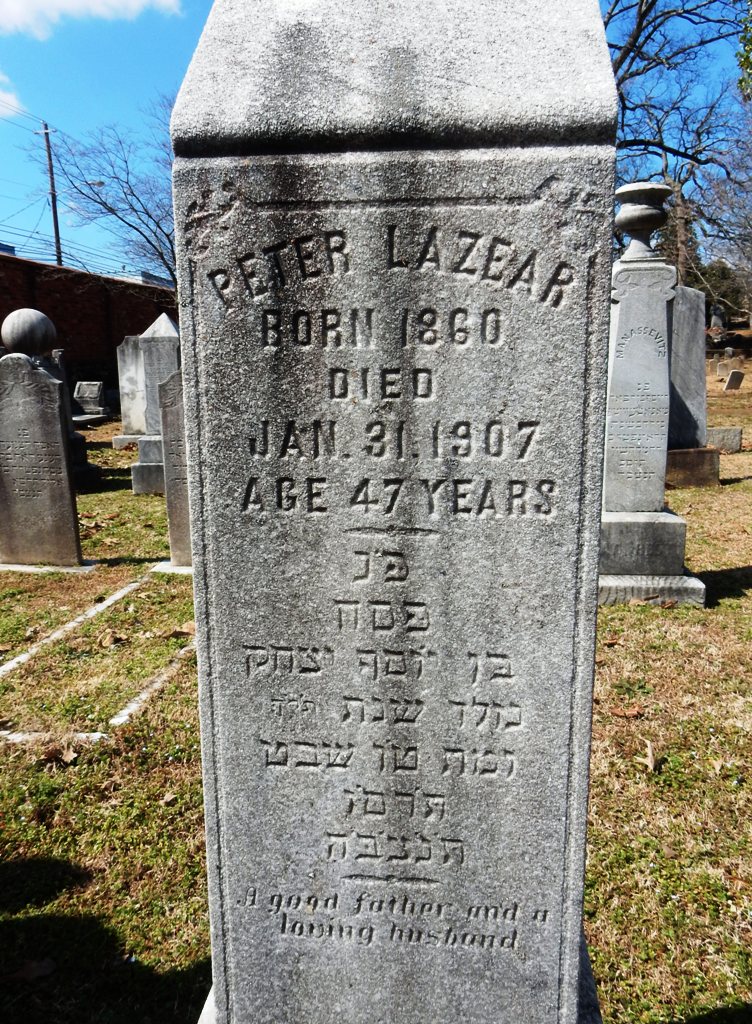
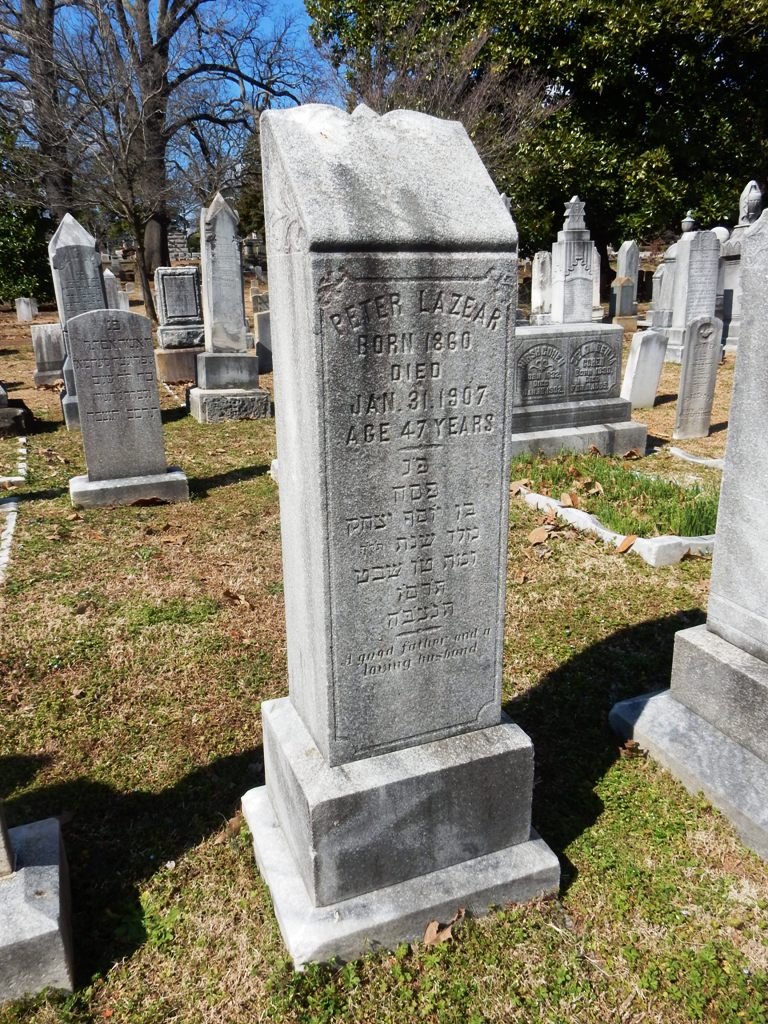
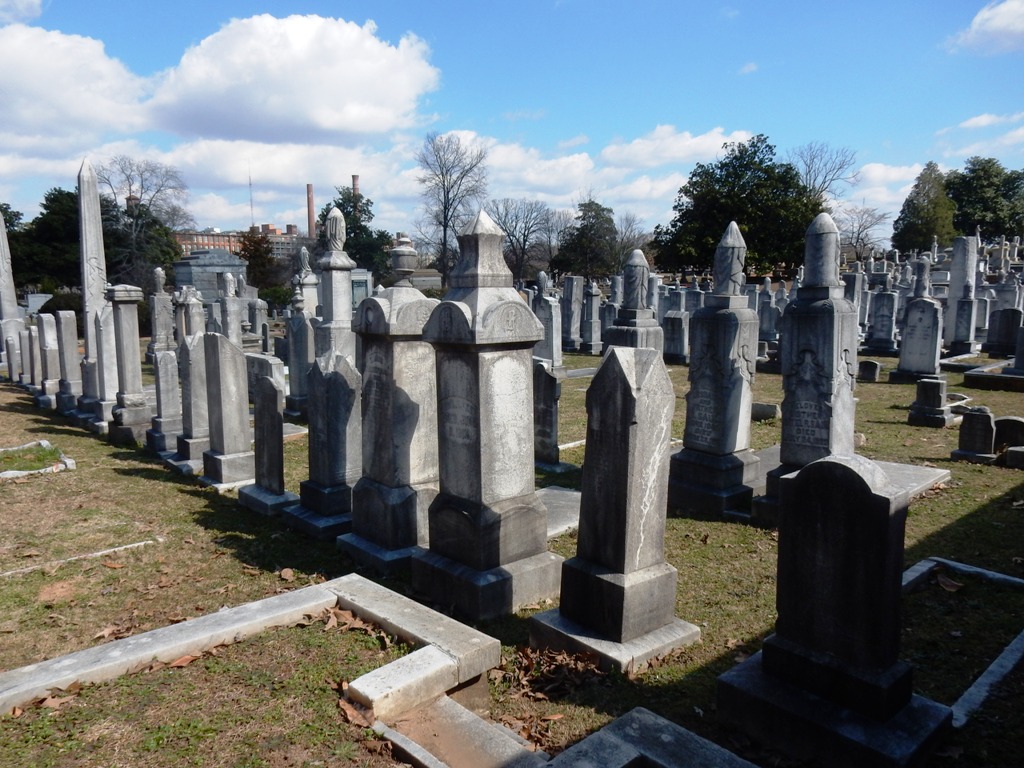
He was laid to rest in Oakland Cemetery in Atlanta. His gravestone lists his father as Yitzchak and notes that he died in the Hebrew calendar year 5667. The English inscription reads, “A good father and a loving husband.” The Hebrew inscription says, “May his soul rest in peace.”87
His obituary was printed in the Atlanta Journal on February 2, 1907.
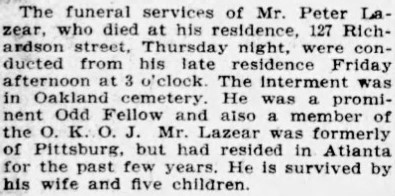
The funeral services of Mr. Peter Lazear, who died at his residence, 127 Richardson street, Thursday night, were conducted from his late residence Friday afternoon at 3 o'clock. The interment was in Oakland cemetery. He was a prominent Odd Fellow and also a member of the O.K.O.J. Mr. Lazear was formerly of Pittsburg, but had resided in Atlanta for the past few years. He is survived by his wife and five children.88
Peter Lazear left behind a legacy of dedication and perseverance. He was laid to rest in Oakland Cemetery, Atlanta. His gravestone, inscribed in both English and Hebrew, reads “A good father and a loving husband” and “May his soul rest in peace,” reflecting the deep love and respect his family and those who knew him best had for him.
Peter’s life story is a testament to his determination, compassion, and his impact on those around him. Despite facing significant challenges, he continuously sought to improve the lives of others. Through his various business ventures, charitable contributions, and religious involvement, Peter left a lasting legacy of kindness and resilience.
Sources
- “Pennsylvania, Pittsburgh City Deaths, 1870-1905,” entry for Issa Lazarowitz, 23 Jul 1887, image, FamilySearch (https://familysearch.org/ark:/61903/1:1:XZ7W-M9F : accessed 16 July 2024), citing vol. 47, p. 112, Allegheny County Courthouse, Pittsburgh, FHL microfilm 505,839, roll 71. ↩︎
- “The Criminal Calendar,” The Pittsburgh Post, 15 May 1889, p. 3, col. 1, image, Newspapers.com (https://www.newspapers.com/article/the-pittsburgh-post/151365723/ : accessed 15 July 2024), clip page by user genistory. ↩︎
- “Sues for $25,000 Damages.” The Pittsburgh Post, 30 November 1889, p. 4, col. 7, image, Newspapers.com (https://www.newspapers.com/article/the-pittsburgh-post/151362213/ : accessed 15 July 2024), clip page by user genistory. ↩︎
- “Pittsburgh: Miscellaneous,” The Pittsburgh Post, 22 April 1890, p. 15, col. 8, image, Newspapers.com (https://www.newspapers.com/article/the-pittsburgh-post/151361444/ : accessed 15 July 2024), clip page by user genistory. ↩︎
- J.F. Diffenbacher’s Directory of Pittsburgh and Allegheny Cities, for 1890, iss. 35, (Pittsburgh, PA: J.F. Diffenbacher, 1890), p. 497, image, Ancestry (https://www.ancestry.com : accessed 16 July 2024); J.F. Diffenbacher’s Directory of Pittsburgh and Allegheny Cities, for 1891, iss. 36, (Pittsburgh, PA: J.F. Diffenbacher, 1891), ps. 532, 1122, image, Ancestry (https://www.ancestry.com : accessed 16 July 2024); J.F. Diffenbacher’s Directory of Pittsburgh and Allegheny Cities, for 1892, iss. 37, (Pittsburgh, PA: J.F. Diffenbacher, 1892), p. 542, image, Ancestry (https://www.ancestry.com : accessed 16 July 2024). ↩︎
- Victory Point Arcade (https://www.victorypointe.com/ : accessed 16 July 2024). ↩︎
- Der folḳsfraynd, (1889) Google Books (https://www.google.com/books/edition/Der_fol%E1%B8%B3sfraynd/BoIpAAAAYAAJ?hl=en&gbpv=1&printsec=frontcover&bsq=Lazarevitz : accessed 17 July 2024). ↩︎
- GCamaraLivermore, Crucero Alfonso XII, 18 February 2018, image, Wikimedia (https://upload.wikimedia.org/wikipedia/commons/7/76/Alfonsoxii_crucero.jpg : accessed 20 July 2024). ↩︎
- Jacob S. Feldman, The Early Migration and Settlement of Jews in Pittsburgh 1754–1894 (np, 1959), 52-53; Jacob Feldman, The Jewish Experience in Western Pennsylvania, A History, 1755-1945 (Pittsburgh: The United Jewish Federation of Greater Pittsburgh, 1896), 109. ↩︎
- “Agudas Achim Congregation (Crawford Street),” The Jewish Encyclopedia of Western Pennsylvania (https://rauhjewisharchives.org/entry/agudas-achim-crawford-street/ : accessed 17 July 2024). ↩︎
- Feldman, The Jewish Experience (1986), 76. ↩︎
- “Aid for Russian Hebrews: A Jewish Society Organized Here to Succor Their Exiled Brethren,” The Pittsburgh Post, 29 August 1890, p. 2, col. 1, image, Newspapers.com (https://www.newspapers.com/article/the-pittsburgh-post/151354464/ : accessed 15 July 2024), clip page by user genistory; “Russian Hebrews Organized,” The Pittsburgh Press, 29 August 1890, p. 4, col. 5, image, Newspapers.com (https://www.newspapers.com/article/the-pittsburgh-press/151361248/ : accessed 15 July 2024), clip page by user genistory. ↩︎
- “Exiled Russians Coming: They Will Be Cared For by the Pittsburgh Immigrant Society,” The Pittsburgh Press, 16 October 1890, unpaginated, 3rd page, col. 2, image, Newspapers.com (https://www.newspapers.com/article/the-pittsburgh-press/151362640/ : accessed 15 July 2024), clip page by user genistory; “Preparing for the Exiles,” The Pittsburgh Post, 17 October 1890, p. 3, col. 2, image, Newspapers.com (https://www.newspapers.com/article/the-pittsburgh-post/151361895/ : accessed 15 July 2024), clip page by user genistory. ↩︎
- “Hebrews to Consolidate: The Jewish Alliance and Relief Society Will Unite,” The Pittsburgh Post, 23 March 1891, p. 2, col. 6, image, Newspapers.com (https://www.newspapers.com/article/the-pittsburgh-post/151362145/ : accessed 15 July 2024), clip page by user genistory. ↩︎
- Feldman, The Early Migration (1959), 61-62. ↩︎
- Feldman, The Jewish Experience (1986), 82. ↩︎
- “Agent Lazarevitz Was Acquitted,” Pittsburgh Dispatch, 6 July 1892, p. 12, col. 4, image, Newspapers.com (https://www.newspapers.com/article/pittsburg-dispatch/151362372/ : accessed 15 July 2024), clip page by user genistory. ↩︎
- “Christmas Clemency,” Pittsburgh Dispatch, 24 December 1892, p. 8, col. 1, image, Newspapers.com (https://www.newspapers.com/article/pittsburg-dispatch/151362753/ : accessed 15 July 2024), clip page by user genistory. ↩︎
- J.F. Diffenbacher’s Directory of Pittsburgh and Allegheny Cities, for 1893, iss. 38, (Pittsburgh, PA: J.F. Diffenbacher, 1893), ps. 540, 1141, image, Ancestry (https://www.ancestry.com : accessed 16 July 2024). ↩︎
- “History and commerce of Pittsburgh and environs: consisting of Allegheny, McKeesport, Braddock and Homestead, 1893-4,” (New York: A.P. Parsons Publishing Co., 1893), 104, images, University of Pittsburgh, Historic Pittsburgh (https://historicpittsburgh.org/islandora/object/pitt%3A31735053221911 : accessed 17 July 2024). ↩︎
- “Gilded Age: End of Gilded Age,” A&E Television Network, 13 February 2018, updated 13 June 2023, History (https://www.history.com/topics/19th-century/gilded-age#end-of-the-gilded-age: accessed 17 July 2024); Gary Richardson and Tim Sablik, “Banking Panics of the Gilded Age,” 4 December 2015, Federal Reserve History (https://www.federalreservehistory.org/essays/banking-panics-of-the-gilded-age : accessed 17 July 2024); “The Panic of 1893 and Labor Activism,” myOpenMath (https://www.myopenmath.com/course/showlinkedtextpublic.php?cid=1818&id=42022 : accessed 17 July 2024). ↩︎
- “Actors Under Arrest: They Are Charged With Securing Money by False Pretense,” The Pittsburgh Press, 5 August 1893, unpaginated, 3rd page, col. 4, image, Newspapers.com (https://www.newspapers.com/article/the-pittsburgh-press/151362050/ : accessed 15 July 2024), clip page by user genistory. ↩︎
- “Withdrew the Suit,” The Pittsburgh Post, 6 August 1893, p. 2, col. 6, image, Newspapers.com (https://www.newspapers.com/article/the-pittsburgh-post/151362550/ : accessed 15 July 2024), clip page by user genistory. ↩︎
- “The Ticket Refused: A Complaint Made Against Messrs. Schaffer and Lazarevitz,” The Pittsburgh Press, 23 September 1893, unpaginated, 2nd page, col. 4, image, Newspapers.com (https://www.newspapers.com/article/the-pittsburgh-press/151361575/ : accessed 15 July 2024), clip page by user genistory. ↩︎
- “Pittsburg Bankers Fail: Forced to the Wall by Suspension of Banker Weinberger, of New York,” The Philadelphia Times, 24 September 1893, p. 11, col. 1, image, Newspapers.com (https://www.newspapers.com/article/the-philadelphia-times/151361734/ : accessed 15 July 2024), clip page by user genistory. ↩︎
- “Tried To Kill the Banker: Peter Lazarevitz in Jail to Escape Hebrew Mob.” The Pittsburgh Post, 27 September 1893, p. 2, col. 5, image, Newspapers.com (https://www.newspapers.com/article/the-pittsburgh-post/90128993/ : accessed 15 July 2024), clip page by user genistory. ↩︎
- “Arrested by Creditors: Lazarevitz, the Insolvent Banker, Followed by a Mob,” The Pittsburgh Press, 27 September 1893, unpaginated, 3rd page, col. 3, image, Newspapers.com (https://www.newspapers.com/article/the-pittsburgh-press/90129102/ : accessed 15 July 2024), clip page by user genistory. ↩︎
- “Arrested by His Creditors: Peter Lazarevitz’s Narrow Escape from an Angry Mob,” The Evening World, New York, NY, 27 September 1893, p. 5, col. 2, image, Library of Congress (https://chroniclingamerica.loc.gov/lccn/sn83030193/1893-09-27/ed-4/seq-5/ : accessed 15 July 2024). ↩︎
- “Banker Schaffer Missing: Charges of Fraud and Civil Actions by the Wholesale,” The Pittsburgh Press, 28 September 1893, unpaginated, 4th page, col. 2, image, Newspapers.com (https://www.newspapers.com/article/the-pittsburgh-press/151362498/ : accessed 15 July 2024), clip page by user genistory. ↩︎
- “Echoes of the Night” The Pittsburgh Press, 30 September 1893, unpaginated, 4th page, col. 3, image, Newspapers.com (https://www.newspapers.com/article/the-pittsburgh-press/151361784/ : accessed 15 July 2024), clip page by user genistory. ↩︎
- “He Refused To Serve” The Pittsburgh Press, 22 October 1893, unpaginated, 5th page, col. 4, image, Newspapers.com (https://www.newspapers.com/article/the-pittsburgh-press/151361512/ : accessed 15 July 2024), clip page by user genistory. ↩︎
- “Under the Lash” The Pittsburgh Press, 11 November 1893, p. 1, col. 2, image, Newspapers.com (https://www.newspapers.com/article/the-pittsburgh-press/151362804/ : accessed 15 July 2024), clip page by user genistory. ↩︎
- “A Bundle of Legal Briefs.” The Pittsburgh Post-Gazette, 22 Nov 1893, p. 3, col. 3, image, Newspapers.com (https://www.newspapers.com/article/pittsburgh-post-gazette/151359758/ : accessed 15 July 2024), clip page by user genistory. ↩︎
- “Convicted of Conspiracy.” The Pittsburgh Post-Gazette, 22 Nov 1893, p. 3, col. 3, image, Newspapers.com (https://www.newspapers.com/article/pittsburgh-post-gazette/151359816/ : accessed 15 July 2024), clip page by user genistory. ↩︎
- “Grand Jury Work.” The Pittsburgh Post-Gazette, 25 January 1894, p. 3, col. 2, image, Newspapers.com (https://www.newspapers.com/article/pittsburgh-post-gazette/151359646/ : accessed 15 July 2024), clip page by user genistory. ↩︎
- Feldman, The Early Migration (1959), 53; Feldman, The Jewish Experience (1986), 109. ↩︎
- J.F. Diffenbacher’s Directory of Pittsburg and Allegheny Cities, for 1897, iss. 42, (Pittsburgh, PA: J.F. Diffenbacher, 1897), p. 591, image, Ancestry (https://www.ancestry.com : accessed 17 July 2024). ↩︎
- “It’s a Trick,” The Pittsburgh Press, 20 December 1897, p. 10, col. 3, image, Newspapers.com (https://www.newspapers.com/article/the-pittsburgh-press/151361005/ : accessed 15 July 2024), clip page by user genistory. ↩︎
- Pittsburgh and Allegheny Directory, Adjacent Territory and Complete Business Compendium of Allegheny County for 1898, iss. 43, (Pittsburgh, PA: R.L. Polk & Co. and R.L. Dudley, 1898), p. 642, image, Ancestry (https://www.ancestry.com : accessed 17 July 2024). ↩︎
- “1921 Webster Ave., Pittsburgh, PA 15219,” realtor.com (https://www.realtor.com/realestateandhomes-detail/1921-Webster-Ave_Pittsburgh_PA_15219_M33209-68052 : accessed 17 July 2024). ↩︎
- Mark Houser, “Pittsburgh MultiStories: Pittsburgh’s Oldest Surviving Skyscraper,” 22 January 2018, Philadelphia Magazine (https://www.pittsburghmagazine.com/pittsburgh-multistories-pittsburghs-oldest-surviving-skyscraper/ : accessed 17 July 2024). ↩︎
- Paul McClure, Park Building Detail, cornice and telemones, 27 September 2008, photograph, 1024 pixels x 768 pixels, Society of Architectural Historians, SAH Archipedia (https://sah-archipedia.org/buildings/PA-01-AL23 : accessed 17 July 2024). ↩︎
- Houser, “Pittsburgh MultiStories.” ↩︎
- “Feather Pillow Found,” The Pittsburgh Press, 17 March 1898, p. 2, col. 4, image, Newspapers.com (https://www.newspapers.com/article/the-pittsburgh-press/151419344/ : accessed 15 July 2024), clip page by user genistory. ↩︎
- “Case Was Dismissed,” The Pittsburgh Press, 18 March 1898, p. 11, col. 2, image, Newspapers.com (https://www.newspapers.com/article/the-pittsburgh-press/151359588/ : accessed 15 July 2024), clip page by user genistory. ↩︎
- “Mr. Wistar Named,” The Patriot, Harrisburg, PA 28 June 1898, unpaginated, 4th page, col. 2, image, Newspapers.com (https://www.genealogybank.com/doc/newspapers/image/v2%3A12A5AB52CC49F908%40GB3NEWS-12B033475DBA4D54%402414469-12AA4974AF53AD52%403?clipid=qdwylanysqswdxhztuuizhaiphstsfwd_ip-10-166-46-94_1721252001874 : accessed 17 July 2024). ↩︎
- Pittsburgh and Allegheny Directory, Adjacent Territory and Complete Business Compendium of Allegheny County for 1899, iss. 44, (Pittsburgh, PA: R.L. Polk & Co. and R.L. Dudley, 1899), p. 765, image, Ancestry (https://www.ancestry.com : accessed 17 July 2024). ↩︎
- “Has Become an Outcast.” The Pittsburgh Post-Gazette, 11 April 1899, p. 3, col. 2, image, Newspapers.com (https://www.newspapers.com/article/pittsburgh-post-gazette/151359882/ : accessed 15 July 2024), clip page by user genistory. ↩︎
- “Children in Court,” The Pittsburgh Press, 6 May 1899, p. 9, col. 4, image, Newspapers.com (https://www.newspapers.com/article/the-pittsburgh-press/151361215/ : accessed 15 July 2024), clip page by user genistory. ↩︎
- 1930 U.S. census, Bronx County, New York, population schedule, enumeration district (ED) 3-180, p. 59 (stamped), 18B (penned), dwelling 13, family 402, Frances Eisenstein, image, Ancestry (http://www.ancestry.com : accessed 17 July 2024), citing NARA microfilm publication T626, roll 1469, microfilm 2341204; 1940 U.S. Census, Bronx County, New York, population schedule, enumeration district (ED) 3-1345B, p. 1A, household 11, Frances Eisenstein, image, Ancestry (http://www.ancestry.com : accessed 17 July 2024), citing NARA microfilm publication T627, roll 2429. ↩︎
- 1900 U.S. Census, Allegheny County, Pennsylvania, population schedule, Pittsburg City, enumeration district (ED) 123, p. 106 (stamped), 14B (penned), dwelling 192, family 285, Fannie Lazrowitz, image, Ancestry (http://www.ancestry.com : accessed 27 February 2021), citing NARA microfilm publication T623, microfilm 1241358. ↩︎
- “Pennsylvania, Death Certificates, 1906-1963,” Pennsylvania, Division of Vital Statistics, Certificate of Death: Max Lazear, 27 June 1959, file no. 51987, image, Ancestry (https://www.ancestry.com : accessed 17 July 2024). ↩︎
- 1900 U.S. Census, Allegheny County, Pennsylvania, population schedule, Allegheny City, enumeration district (ED) 42, p. 195 (stamped), 4A (penned), dwelling 49, family 71, Louis Gorfinkell, image, Ancestry (http://www.ancestry.com : accessed 17 July 2024), citing NARA microfilm publication T623, roll 1355. ↩︎
- 1900 U.S. Census, Allegheny County, Pennsylvania, population schedule, Pittsburgh City, enumeration district (ED) 127, p. 171 (stamped), 7B (penned), dwelling 49, family 71, Peter Lazerevitz, image, Ancestry (http://www.ancestry.com : accessed 17 July 2024), citing NARA microfilm publication T623, microfilm 1241358. ↩︎
- “Judgments Entered,” The Pittsburgh Post, 15 May 1901, p. 5, col. 3, image, Newspapers.com (https://www.newspapers.com/article/the-pittsburgh-post/151361932/ : accessed 15 July 2024), clip page by user genistory. ↩︎
- “Mere Mention: Life and Miscellaneous Insurance Notes,” The Spectator, vol 67, iss. 25, 19 December, 1901, p. 312, The Internet Archive, (https://archive.org/details/sim_spectator-an-american-review-of-insurance_1901-12-19_67_25/page/312/mode/2up?q=Lazarevitz : accessed 17 July 2024). ↩︎
- Pittsburgh and Allegheny Directory, 1902, iss. 47, (Pittsburgh, PA: R.L. Polk & Co. and R.L. Dudley, 1902), ps. 849, 1734-45, image, Ancestry (https://www.ancestry.com : accessed 17 July 2024). ↩︎
- “1638 Colwell St., Pittsburgh, PA 15219,” realtor.com (https://www.realtor.com/realestateandhomes-detail/1638-Colwell-St_Pittsburgh_PA_15219_M36606-63168 : accessed 17 July 2024). ↩︎
- “Many Creditors of Weldon Company,” The Pittsburgh Press, 10 January 1902, p. 3, col. 5, image, Newspapers.com (https://www.newspapers.com/article/the-pittsburgh-press/151359506/ : accessed 15 July 2024), clip page by user genistory; “Petitions in Bankruptcy,” The Pittsburgh Post, 10 January 1902, p. 5, col. 1, image, Newspapers.com (https://www.newspapers.com/article/the-pittsburgh-post/151361073/ : accessed 15 July 2024), clip page by user genistory. ↩︎
- “Lost In Another Big Game,” The Pittsburgh Press, 13 February 1903, p. 1, col. 8, image, Newspapers.com (https://www.newspapers.com/article/the-pittsburgh-press/151364237/ : accessed 15 July 2024), clip page by user genistory. ↩︎
- “News of the Summer Resorts: Cambridge,” The Pittsburgh Press, 19 July 1903, p. 34, col. 3, image, Newspapers.com (https://www.newspapers.com/article/the-pittsburgh-press-altman-on-summer-va/116808695/ : accessed 15 July 2024), clip page by user ecaldwelllinker. ↩︎
- “Cambridge Springs,” The Jewish Encyclopedia of Western Pennsylvania (https://rauhjewisharchives.org/document/american-federation-of-zionists-convention-book-1903/?post_id=269455 : accessed 17 July 2024). ↩︎
- “Creatore is Soon to Leave,” The Pittsburgh Press, 12 September 1903, p. 3, cols. 1-3, image, Newspapers.com (https://www.newspapers.com/article/the-pittsburgh-press/151363232/ : accessed 15 July 2024), clip page by user genistory. ↩︎
- “American Federation of Zionists Convention book (1903),” 6-9 June 1903, souvenir program, image, The Jewish Encyclopedia of Western Pennsylvania (https://rauhjewisharchives.org/entry/cambridge-springs/ : accessed 19 July 2024). ↩︎
- “Good Place But Little Slower: Personal Movements,” The Pittsburgh Press, 15 March 1903, p. 2, col. 1, image, Newspapers.com (https://www.newspapers.com/article/the-pittsburgh-press/151364061/ : accessed 15 July 2024), clip page by user genistory; “Figures Like Skyscrapers,” The Pittsburgh Press, 2 May 1903, p. 3, col. 1, image, Newspapers.com (https://www.newspapers.com/article/the-pittsburgh-press/151363804/ : accessed 15 July 2024), clip page by user genistory; “Transferred Deeds,” Pittsburgh Weekly Gazette, 6 August 1902, p. 12, col. 3, image, Newspapers.com (https://www.newspapers.com/article/pittsburgh-weekly-gazette/151359418/ : accessed 15 July 2024), clip page by user genistory. ↩︎
- “Wanted: Male Help,” The Pittsburgh Press, 17 March 1903, p. 14, col. 3, image, Newspapers.com (https://www.newspapers.com/article/the-pittsburgh-press/151364111/ : accessed 15 July 2024), clip page by user genistory. ↩︎
- “Acreage Sale Near Donora,” The Pittsburgh Post, 26 June 1903, p. 7, col. 1, image, Newspapers.com (https://www.newspapers.com/article/the-pittsburgh-post/151539834/ : accessed 18 July 2024), clip page by user genistory; Pittsburgh and Allegheny Directory, 1903, iss. 48, (Pittsburgh, PA: R.L. Polk & Co. and R.L. Dudley, 1903), p. 1006, image, Ancestry (https://www.ancestry.com : accessed 17 July 2024); Pittsburgh and Allegheny Directory, 1904, iss. 49, (Pittsburgh, PA: R.L. Polk & Co. and R.L. Dudley, 1904), p. 962, image, Ancestry (https://www.ancestry.com : accessed 20 July 2024). ↩︎
- “Notices” The Pittsburgh Press, 11 July 1903, p. 13, col. 2, image, Newspapers.com (https://www.newspapers.com/article/the-pittsburgh-press/151607215/ : accessed 18 July 2024), clip page by user genistory; “Notices,” The Pittsburgh Press, 10 July 1903, p. 23, col. 2, image, Newspapers.com (https://www.newspapers.com/article/the-pittsburgh-press/151607139/ : accessed 18 July 2024), clip page by user genistory; “New Quarters for the Goal,” Pittsburgh Weekly Gazette, 11 July 1903, p. 12, col. 3, image, Newspapers.com (https://www.newspapers.com/article/pittsburgh-weekly-gazette/151541936/ : accessed 15 July 2024), clip page by user genistory. ↩︎
- “Daily Law News: Common Pleas No. 1,” The Pittsburgh Press, 14 July 1903, p. 2, col. 1, image, Newspapers.com (https://www.newspapers.com/article/the-pittsburgh-press/151364296/: accessed 15 July 2024), clip page by user genistory. ↩︎
- “Mortgages,” The Pittsburgh Post, 14 July 1903, p. 9, col. 6, image, Newspapers.com (https://www.newspapers.com/article/the-pittsburgh-post/151363570/ : accessed 15 July 2024), clip page by user genistory. ↩︎
- “Daily Law News: Common Pleas Court No. 1,” The Pittsburgh Press, 24 September 1903, p. 2, col. 3, image, Newspapers.com (https://www.newspapers.com/article/the-pittsburgh-press/151364200/ : accessed 15 July 2024), clip page by user genistory. ↩︎
- “Fraud is Denied: Real Estate Sales Profit Causing Stockholders Trouble,” The Pittsburgh Press, 7 October 1903, p. 2, col. 3, image, Newspapers.com (https://www.newspapers.com/article/the-pittsburgh-press/151364200/ : accessed 15 July 2024), clip page by user genistory; “No Fraud, Declares Real Estate Man,” The Pittsburgh Post, 7 October 1903, p. 2, col. 3, image, Newspapers.com (https://www.newspapers.com/article/the-pittsburgh-post/151539639/ : accessed 18 July 2024), clip page by user genistory. ↩︎
- “Business of Fifth Ave. Realty Co.,” The Pittsburgh Press, 3 April 1904, p. 26, col. 3, image, Newspapers.com (https://www.newspapers.com/article/the-pittsburgh-press/151540519/ : accessed 18 July 2024), clip page by user genistory; “Good Lot Sold in East End,” Pittsburgh Weekly Gazette, 3 April 1904, sec. 3, p. 7, col. 2, image, Newspapers.com (https://www.newspapers.com/article/pittsburgh-weekly-gazette/151541151/ : accessed 18 July 2024), clip page by user genistory. ↩︎
- “Roosevelt Objected to Calling Him Cupid,” The Pittsburgh Press, 8 November 1903, p. 16, col. 3, image, Newspapers.com (https://www.newspapers.com/article/the-pittsburgh-press/151363377/ : accessed 15 July 2024), clip page by user genistory. ↩︎
- “Says Larkin is Deluded,” The Pittsburgh Press, 16 July 1904, p. 1, col. 3, image, Newspapers.com (https://www.newspapers.com/article/the-pittsburgh-press/151363316/ : accessed 15 July 2024), clip page by user genistory. ↩︎
- “Hot Charges are Flying: Neff Makes Allegations,” The Pittsburgh Press, 16 July 1904, p. 4, col. 3, image, Newspapers.com (https://www.newspapers.com/article/the-pittsburgh-press/151363014/ : accessed 15 July 2024), clip page by user genistory; “Thirteenth Ward Excited” The Pittsburgh Post, 16 July 1903, p. 5, col. 1, image, Newspapers.com (https://www.newspapers.com/article/the-pittsburgh-post/151542079/ : accessed 15 July 2024), clip page by user genistory; ↩︎
- “Cry Now for Man With Cash: Governor Dips in a Fight,” The Pittsburgh Press, 24 July 1904, p. 2, col. 2, image, Newspapers.com (https://www.newspapers.com/article/the-pittsburgh-press/151363745/ : accessed 15 July 2024), clip page by user genistory. ↩︎
- “Sparr May Be The Alderman,” The Pittsburgh Press, 6 September 1904, p. 2, col. 1, image, Newspapers.com (https://www.newspapers.com/article/the-pittsburgh-press/151363269/ : accessed 15 July 2024), clip page by user genistory. ↩︎
- “April Does Not Appeal to Brokers: At Grandview,” The Pittsburgh Press, 30 April 1905, p. 32, col. 2, image, Newspapers.com (https://www.newspapers.com/article/the-pittsburgh-press/151363774/ : accessed 15 July 2024), clip page by user genistory. ↩︎
- Melanie Grant, Victoria Bartlett, and Dr. Colleen Hall, “Part III: Mainstream Suffragists-National American Woman Suffrage Association: Biographical Sketch of Eva Halpern (Mrs. Albert) Robin,” Biographical Dictionary of the Woman Suffrage Movement in the United States, Alexander Street (https://documents.alexanderstreet.com/d/1010596148 : accessed 20 July 2024). ↩︎
- “Entertains at a Luncheon: Dinner for Delaware Guest,” The Pittsburgh Press, Pittsburgh, PA, 3 May 1905, p, 12. col. 2, image, Newspapers.com (https://www.newspapers.com/article/the-pittsburgh-press/76014992/ : accessed 18 April 2021), clip page by user genistory. ↩︎
- “Kishinev pogrom,” last modified 18 June 2024, Wikimedia Foundation, Inc., (https://en.wikipedia.org/wiki/Kishinev_pogrom : accessed 20 July 2024). ↩︎
- “Wants Russian Oppression Of Jewish Subjects Stopped,” The Atlanta Journal, 19 August 1905, p. 7, cols. 1-2, image, Newspapers.com (https://www.newspapers.com/article/the-atlanta-journal/151363660/ : accessed 15 July 2024), clip page by user genistory. ↩︎
- Atlanta City Directory 1906, vol. 30, (Atlanta, GA: Foote & Davies Co., 1906), p. 929, image, Ancestry (https://www.ancestry.com : accessed 4 May 2021). ↩︎
- Atlanta City Directory 1907, vol. 31, (Atlanta, GA: Foote & Davies Co., 1907), p. 968, image, Ancestry (https://www.ancestry.com : accessed 4 May 2021). ↩︎
- “Wanted: Salesmen,” The Atlanta Constitution, 7 December 1906, p. 15., col. 1, image, Newspapers.com (https://www.newspapers.com/article/the-atlanta-constitution/151363940/ : accessed 15 July 2024), clip page by user genistory. ↩︎
- Find a Grave, database and images (https://www.findagrave.com/memorial/40932574/peter-lazear : accessed 20 July 2024), memorial page for Peter Lazear (1860–31 Jan 1907), Find a Grave Memorial ID 40932574, citing Oakland Cemetery, Atlanta, Fulton County, Georgia, USA, Maintained by Walk The Earth -J.K.Wilson (contributor 46578531). ↩︎
- “Deaths and Funerals,” The Atlanta Journal, 19 August 1905, p. 4, col. 1, image, Newspapers.com (https://www.newspapers.com/article/the-atlanta-journal/151363421/ : accessed 15 July 2024), clip page by user genistory. ↩︎
 Genistory
